












Choose the right guide for your family
Not every home needs the same approach. Some families want help setting a first phone up for a Grade 6 learner, while others are trying to calm arguments about gaming, homework and bedtime on school nights in Durbanville or Kempton-style busy routines in larger cities. Practical topics make it easier to start with the issue that matters most right now.
If you are unsure where to begin, look for the guide that matches your main pressure point. A family with younger children may need simple limits and clear device zones. A family with teens may need stronger conversations about trust, social apps and study time.
- New to limits: start with a first phone or first tablet guide
- Dealing with conflict: try a teen rule reset or sibling fairness session
- Busy evenings: look at bedtime routines and study time planning
- Mixed households: use co parenting alignment or grandparent support
Topics we cover
Screen Time Guides cover common family decisions around screen-time limits, parental controls and media rules in the home. They explain how to set boundaries, when to adjust them and how to keep expectations fair across siblings. The focus is practical, not preachy, and it is meant to help parents make decisions that fit school days, weekends and holidays.
Some guides look at phone settings, others focus on household habits. You may need one clear rule for devices at supper, or a fuller family media plan that covers gaming, social apps and shared television time. The best result is usually a plan that children can understand and parents can keep to without constant reminding.
- Simple limits for daily use and bedtime
- Parental controls for app access, downloads and contacts
- Family media plans for shared rules in the home
- Age-appropriate expectations for phones, tablets and consoles
When a family media plan helps most
When the same problem keeps surfacing, a family media plan can give the household a steadier structure. It can help with disputes about screen time during homework, arguments over weekend gaming or confusion about what is allowed on a family tablet. In homes where children move between parents, or between home and grandparents, a written plan often reduces mixed messages.
We often see families use a plan to set a few simple rules: where devices may be used, when they must be put away and what happens if the rules are broken. This is not about being strict for the sake of it.
- Device-free mealtimes
- Shared expectations for gaming and social apps
- School-night limits and weekend flexibility
- Clear steps for parents, caregivers and grandparents
How parental controls can support the plan
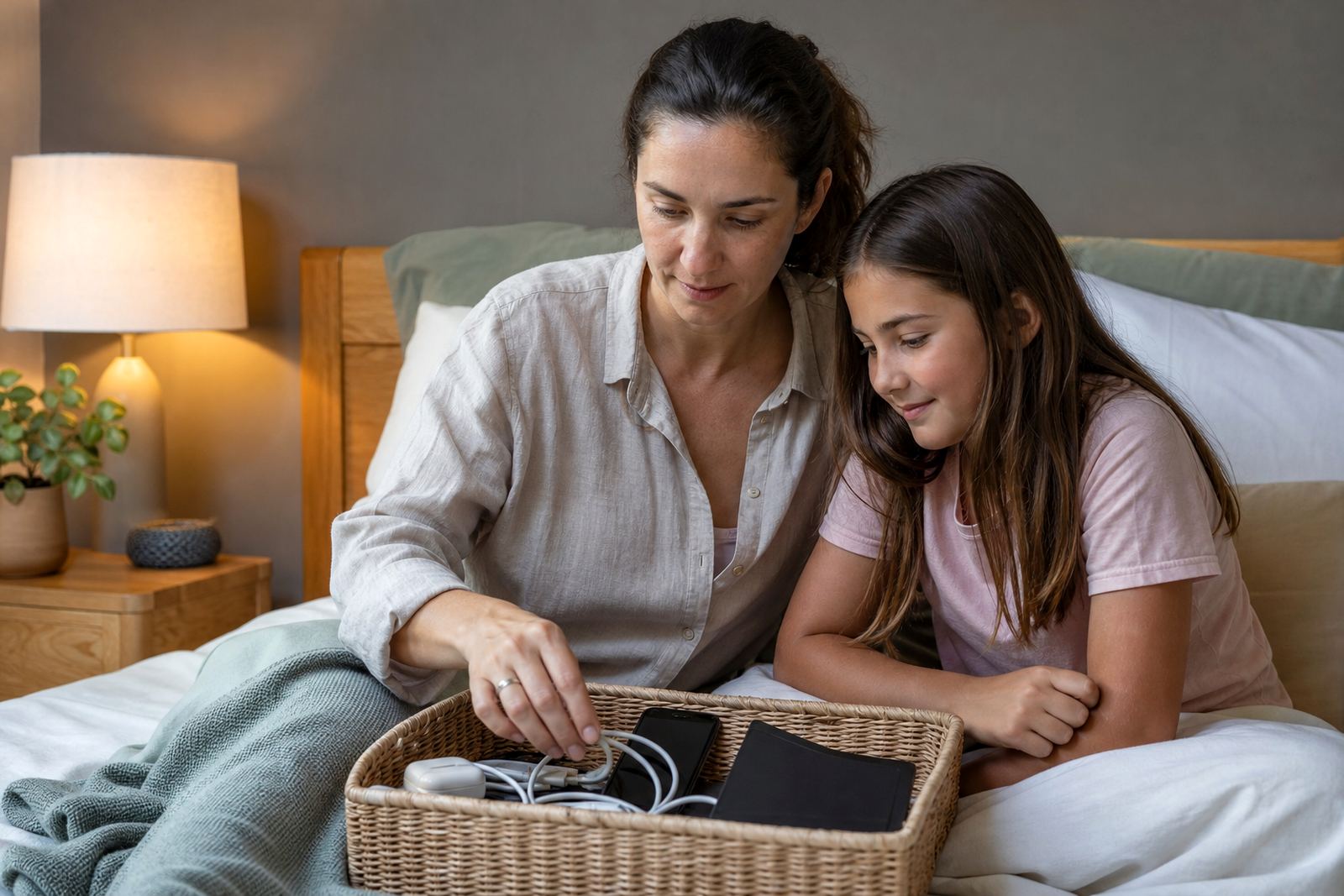
Parental controls are a tool, not a replacement for conversation. They can help with app approvals, content filtering, screen-time limits and bedtime locks, but they work best when the child knows why the settings are there. For younger children, that can mean straightforward controls on a tablet or phone. For teens, the balance may shift toward lighter controls and more agreement about trust.
It helps to keep the setup practical. Think about who buys the apps, who knows the passwords and who changes the settings when a child grows older. A family in Durbanville may want one approach for a primary school child and a different one for a matric learner. That is normal. Children do not all need the same rules at the same age.
- Set app permissions and download approvals
- Limit late-night access to devices
- Filter age-inappropriate content where needed
- Review settings after birthdays, school changes or holidays
Guides for everyday family situations
Some families need help with one specific issue, while others need a fuller reset. That is why the guide range includes topics such as study time planning, bedtime routines, social app boundaries and holiday screen plans. A short, practical session can be enough to get things moving again, especially when the household has slipped into default habits.
These guides are useful in Cape Town, Johannesburg, Pretoria, Durban, Bloemfontein and beyond because the basics are the same even if the routines are not. Sibling arguments, after-school tiredness and weekend phone battles happen in many homes. The detail changes, but the need for a clear plan is familiar.
- Study time planning for homework and revision
- Bedtime routines that reduce late scrolling
- Social app boundaries for younger teens
- Holiday screen plans for travel and longer breaks
How to use the hub
Start by choosing the guide that matches your biggest challenge. If you are unsure, begin with a family media plan or first phone planning session because those often uncover the main issues behind the conflict. Once the basics are in place, you can add a sibling fairness session, co parenting alignment or a grandparent support session where needed.
Screenage is based in Durbanville, Cape Town and supports families across South Africa, including Cape Town, Johannesburg, Durban, Pretoria, Bloemfontein, Gqeberha and Stellenbosch. If you would like to make a booking, families reach us through the enquiry form on our contact page. A small change in routine can make a big difference, even if it takes a few tries to get there.