
















How to read these family stories
Families across South Africa face everyday situations like these, from Cape Town and Durbanville to Johannesburg, Durban, Pretoria, Bloemfontein, Gqeberha and Stellenbosch. Common pressure points include bedtime scrolling, homework delays, shared tablets and different rules between two homes.
Some families need simple screen-time limits, while others want help with parental controls, a family media plan or a reset after the rules became unclear. Start with the situation that feels closest to your own, then book a session when you are ready.
Busy school weeks and bedtime routines
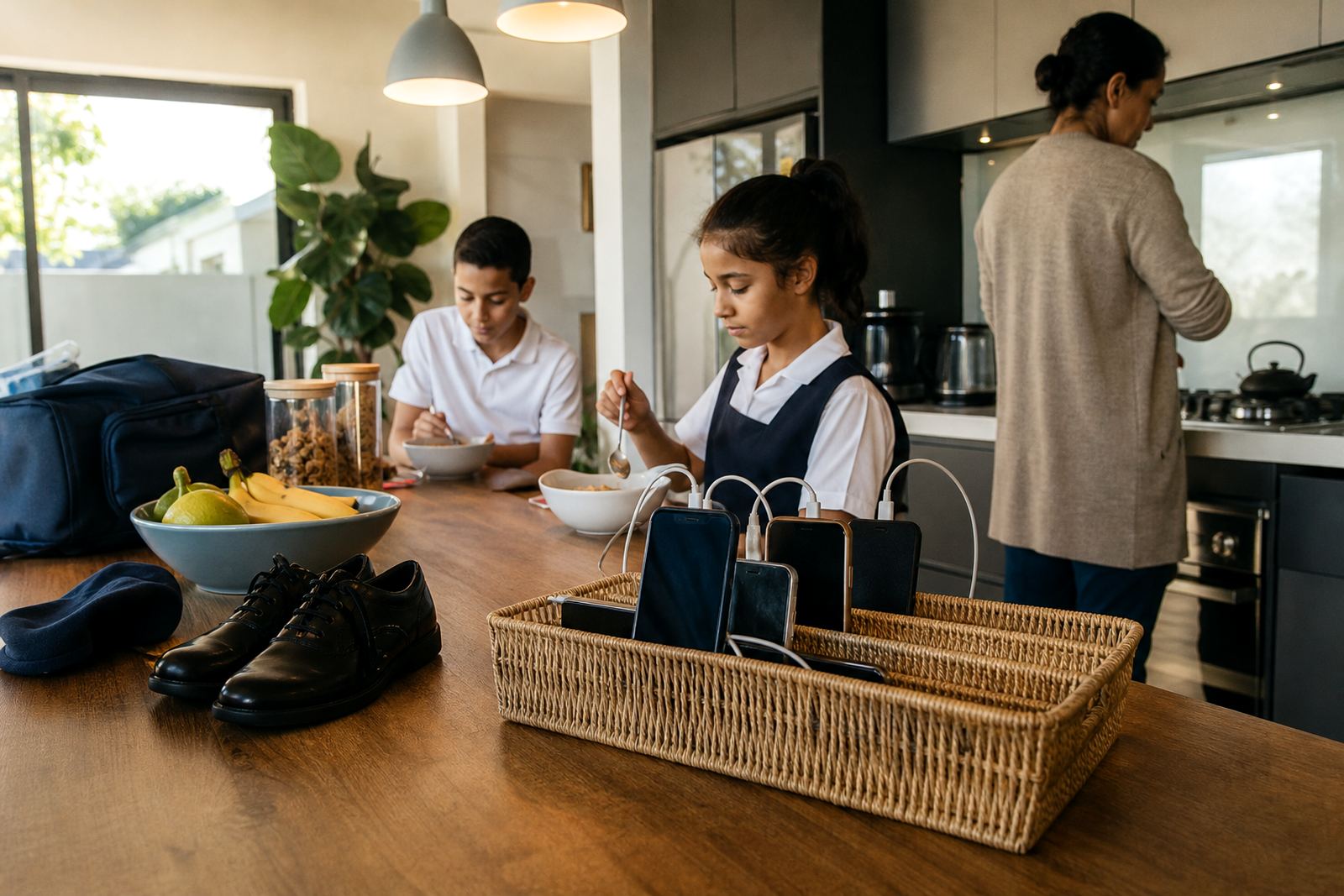
Many families start with evenings, because that is where screens can quietly run late. A bedtime routine session may suit a home where one child watches short videos in bed, another checks messages after lights out, and parents want clearer cut-off times without creating a fight every night.
- Set a device parking spot in the kitchen or hallway
- Use a charging time that starts before the usual bedtime
- Switch off notifications for the night
- Agree on what happens if homework runs late
First phones, teenage rules and growing independence
A first phone planning session often helps when a child is moving into more independence and parents want the rules to be plain. The focus is usually on who can be contacted, which apps are allowed, when location sharing is useful and how much privacy a teenager should have at home.
- Set a clear passcode and parent oversight from day one
- Decide which apps are for school and which are for social use
- Agree on no-phone times for meals, homework and sleep
- Review the plan every few months as needs change
Families in Pretoria or Johannesburg may be balancing long school days, sports and travel between aftercare, while families in smaller towns may want fewer apps and simpler rules. A good plan is one the whole household can remember, not one that only works on paper.
Shared homes, sibling fairness and co-parenting alignment
Some households are not just about one parent and one child. A sibling fairness session can help when children of different ages argue about who gets more time, or when one child has schoolwork on a laptop while another wants gaming time. A co-parenting alignment session may help when rules need to be consistent between two homes.
For separated parents, the aim is usually not perfection. It is to make sure the basic boundaries stay recognisable in both homes so children do not have to keep learning new rules every weekend. That may include the same bedtime cut-off, the same app restrictions and the same homework expectations.
Study time, gaming time and social app boundaries
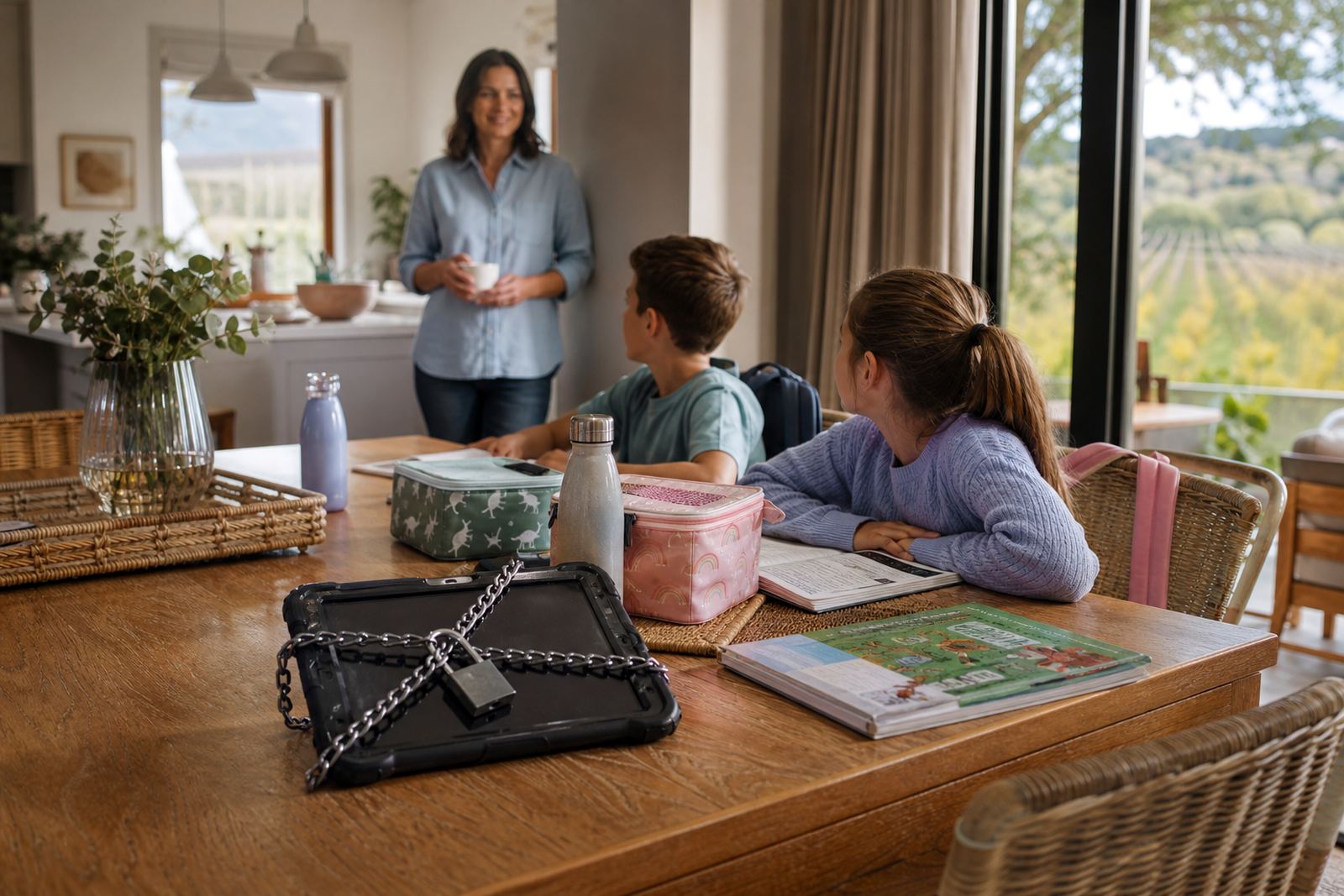
Not every screen issue is about too much time. Some families mainly need better timing, better access or clearer app categories. A study time planning session can help with laptops and tablets used for homework, while a gaming time session may suit a child who plays after school and struggles to stop. Social app boundaries can help where group chats, feeds and short-form video start crowding out other parts of the day.
- Separate school apps from entertainment apps
- Use timers for gaming and revision blocks
- Keep social apps out of the bedroom at night
- Agree on which messages need a reply and which can wait
These rules should fit the child’s age, the household routine and the real devices in the home. A family in Bloemfontein with one study tablet will need a different plan from a larger household in Cape Town with several phones and shared access, and that is normal.
Holiday screens, grandparents and practical support
School holidays often change everything at once. A holiday screen plan may help when usual routines disappear and children spend more time at home, with cousins, or with grandparents. A grandparent support session can be useful when older caregivers need a simple explanation of the rules, the app controls and the reasons behind them.
Families often ask for a family media plan session when they want one document that covers weekdays, weekends, travel, rainy days and special occasions. It can include:
- Allowed times for phones, tablets, gaming and streaming
- House rules for visitors and sleepovers
- What to do when a limit is reached
- How adults will model the same habits
These are practical household tools, not medical or psychological advice. If screen use is affecting a child’s mood, sleep, schoolwork or relationships in a serious way, speak to a qualified professional.