




Start With a Household Cut-Off Time
Bedtime locks work best when the whole family agrees on a set time for screens to stop, not only the child who seems to push back the most. Pick a realistic cut-off that suits school mornings, homework and after dinner routines, then keep it steady on weeknights.
For many families in Durbanville, Cape Town and other busy suburbs, the challenge is not only the device itself, but the habit of one more video, one more message, one more game. That is why the rule should be clear in plain language. For example, screens off at 8 pm, chargers in the kitchen, and phones back in bedrooms only after breakfast.
If your household includes teens, younger siblings or shared devices, write the rule down and keep it where everyone can see it. A family media plan makes it easier to explain the reason behind the rule, especially when there are school nights, extra murals and early starts. This is general guidance only, not medical or psychological advice. If you have concerns about sleep, behaviour or anxiety, speak to a qualified professional.
Choose the Right Lock Method for Each Device
Most families do not need a complicated setup. A bedtime lock can be as simple as a scheduled shut off, app time limits, or a rule that charging happens outside bedrooms. The best choice depends on age, maturity and how much supervision is needed.
Use the tools that are already available on the phone or tablet, then pair them with a family agreement. A lock is strongest when it supports the routine instead of doing all the work on its own. If a child knows the device will stop at bedtime every night, there is less room for bargaining.
- Set a nightly screen cut-off for apps, games and browsing.
- Keep social apps paused after a chosen hour.
- Use a parent-controlled setting for downloads and new app requests.
- Allow only calls or messages from selected contacts if needed.
- Review limits each term, especially as school demands change.
Families in Johannesburg, Pretoria and Bloemfontein often find that weekdays need stronger limits than weekends. That is fine as long as the exception is planned and not decided at bedtime when everyone is tired.
Set Up a Charging Area Outside Bedrooms
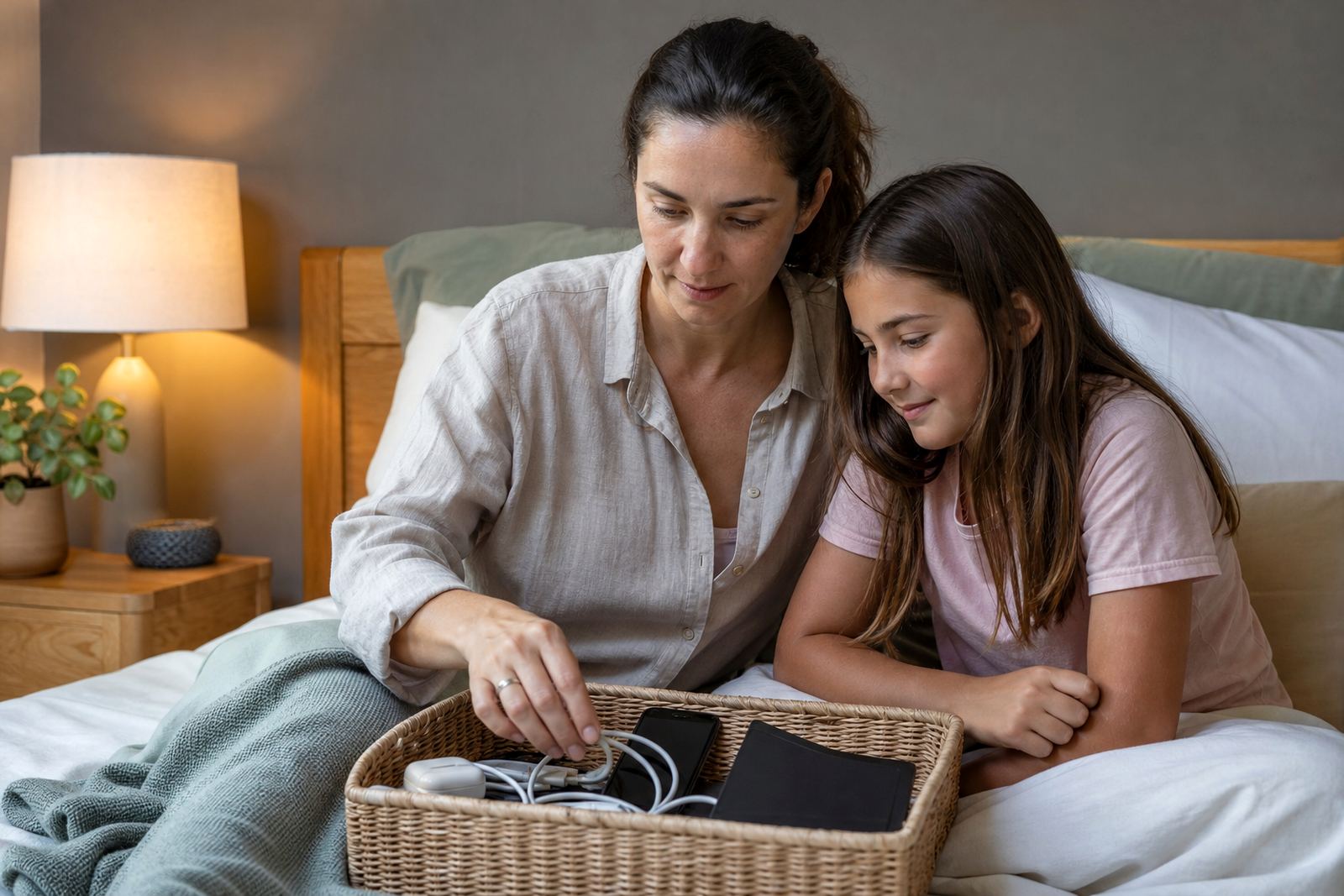
A charging area is one of the most useful parts of a bedtime routine. It removes the temptation to scroll after lights out and stops overnight notifications from lighting up the room.
The spot does not need to be fancy. A kitchen counter, hallway table or family shelf can work if it is safe, tidy and easy to reach in the morning. Keep the charging point close to an outlet and away from water, food spills and clutter.
- Use one named basket, tray or caddy for each child.
- Label chargers so siblings do not mix them up.
- Store devices face down to reduce the urge to check them.
- Make sure the area is easy to monitor from the living space.
For shared homes and apartment blocks, the goal is simple: one agreed place, one routine, no devices under pillows or hidden in bags.
Use a Calm Evening Routine Before the Lock Kicks In
A good bedtime lock begins before the actual shut off time. Children cope better when they know what comes next, so build a short wind-down sequence that repeats every night. That might be supper, homework pack away, shower, prep school clothes, then screen off.
Keep the last 30 to 60 minutes before bed as quiet as possible. Avoid starting a new show or game close to bedtime because it makes stopping harder. If your child uses a device for reading or schoolwork, switch it to a non-entertainment mode before the evening ends.
Some families find it useful to say the same phrase every night, such as, “Ten minutes left, then devices go to charge.” Predictable language reduces arguments because the rule sounds like a routine, not a punishment. If the first few nights are messy, stay consistent. It usually takes a bit of practice before the new habit sticks.
Agree on Exceptions Before They Become Fights
Bedtime locks need clear exception rules or they turn into a nightly debate. Decide in advance what counts as an exception and who may approve it. A parent may allow extra time for travel, a late study session, or a school notice that needs attention. Anything else should wait until the next morning.
Write the exception list into your family media plan and keep it short. That way, everyone knows the difference between a planned exception and a request made at the last minute. If more than one adult is involved, it helps to agree on the same rule so children do not get mixed messages.
- School work due the next day.
- Travel or family emergencies.
- Pre-agreed weekend allowances.
- One-off calls with relatives in another time zone.
- Special events that were discussed earlier in the day.
When children know the limits, they are less likely to ask every night. That makes bedtime simpler for parents and grandparents too, especially in households where several adults help with after-school care.
Check That the Lock Works Across the Whole Night
Once the routine is in place, test it for a full week. Check whether the device stays quiet, whether apps reopen too easily, and whether notifications are still visible from the bed. If a child wakes up and reaches for the phone, the setup may need tightening.
Review the routine after the first few nights and again after exams, holidays or school term changes. A bedtime lock is not meant to be harsh. It should simply make the healthy choice easier to follow. If the setup is causing conflict every night, adjust the process rather than waiting for the problem to fix itself.
Families using Screenage often ask for practical help with bedtime routines, family media plans and device limits that fit daily life in South Africa. The aim is not perfect behaviour, just a steadier evening flow that supports rest, school and family time.