


The Brief from a Brackenfell Blended Home
The family lived between Brackenfell and nearby Durbanville, with children moving regularly between two homes during the school week and alternate weekends. The brief was simple on paper: make screen use less emotional, less negotiated and easier for both adults to manage.
They wanted one shared media plan that covered weekdays, weekends, homework hours, bedtime and gaming, with enough flexibility for birthdays, visits and rainy Cape Town days. The adults also asked for a calmer way to handle phone handovers, app access and late-night messaging, because the current setup kept drifting from one house to the next.
- Client type: blended household with school-age children
- Town: Brackenfell, Cape Town northern suburbs
- Main need: one shared family media plan across two homes
- Priority: fewer arguments around screens and routines
Constraints We Had to Work Around for families
The biggest constraint was consistency. The two homes did not run identical schedules, and that meant a rule that worked in one house often failed in the other. One parent worked longer shifts some weeks, while the other needed a simpler system that grandparents could also follow during afternoon care.
We also had to keep the plan realistic for South African family life. On top of that, the children used different devices, which meant the plan had to be easy to understand even when the adults were not in the same room or even the same suburb.
- Different household routines and handover days
- Support needed for parents and grandparents
- Mixed device use across phones and tablets
What We Put in Place Over Three Weeks
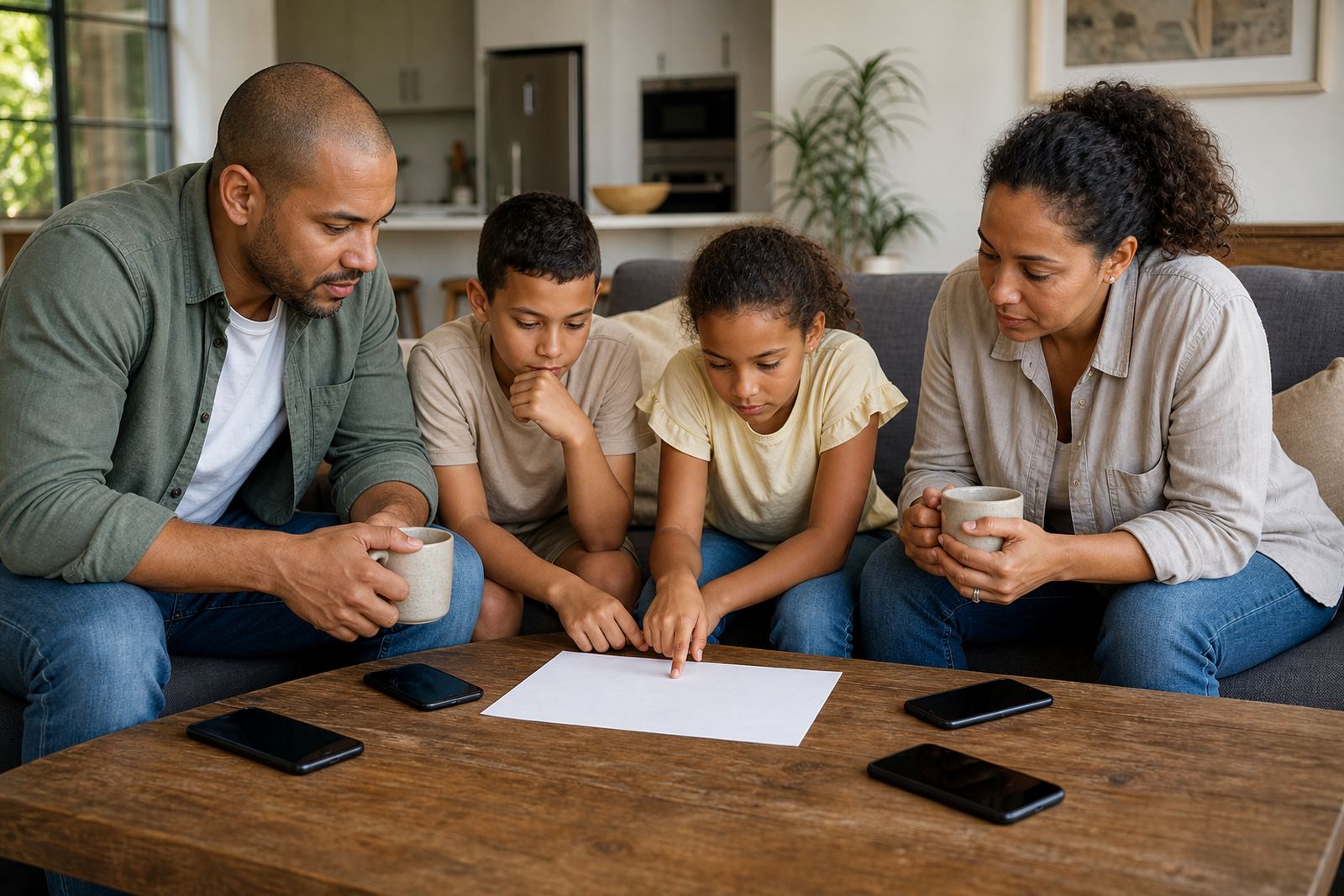
We worked through a three-week process that started with a family media plan session and then moved into practical setup. First, we mapped the daily routine in both homes, including wake-up time, school prep, homework, meal times, sports and bedtime. Then we helped the adults agree on shared rules instead of separate house rules that kept clashing.
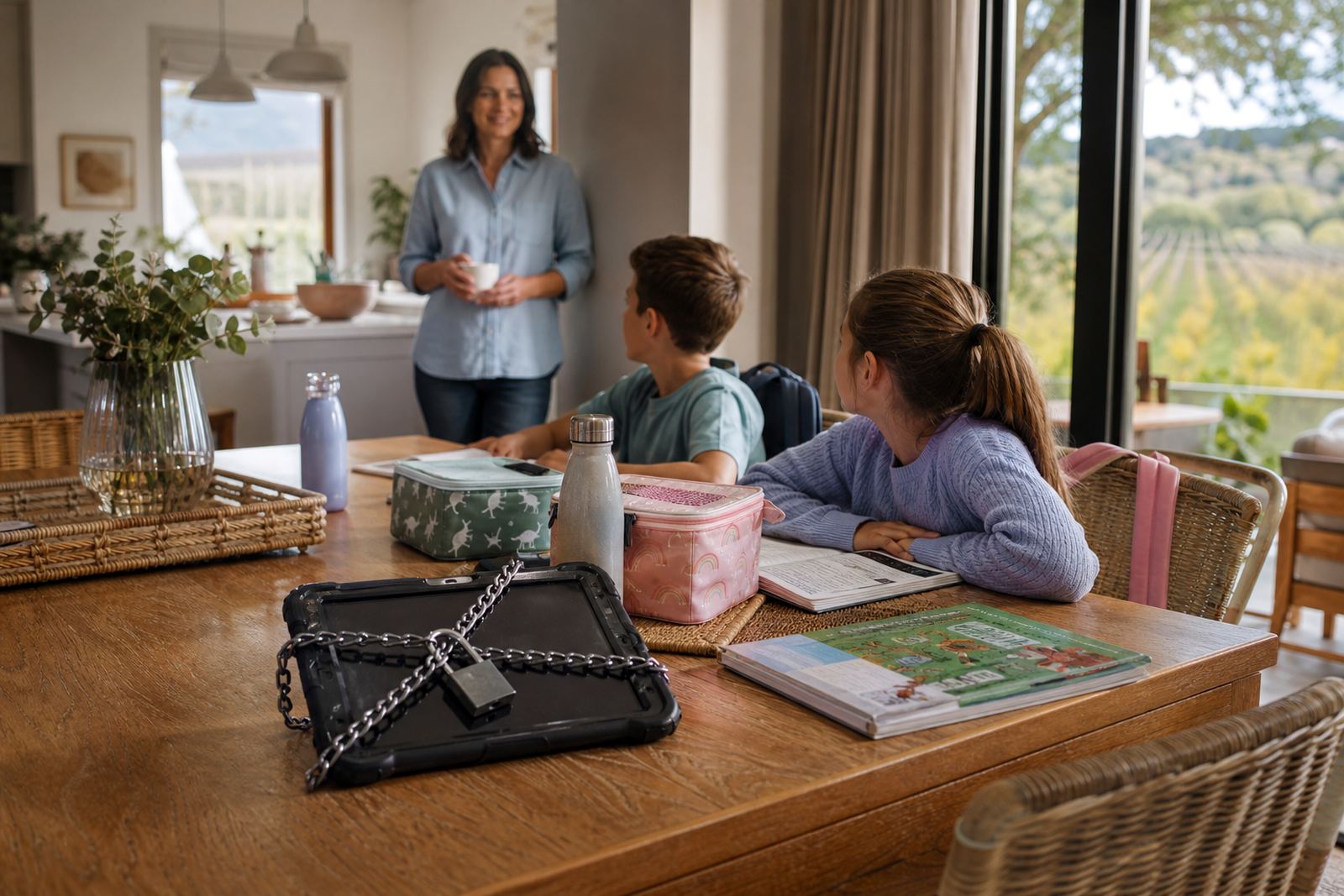
We supplied a first phone planning guide, a sibling fairness session and a bedtime routine session so the family could tackle the main pressure points one by one. The plan covered screen-time limits by time of day, app categories that needed approval, and the moments when a device should be parked away from bedrooms and dining areas.
- Week 1: family media plan session and routine mapping
- Week 2: first phone planning, sibling fairness and bedtime rules
- Week 3: review, refinements and handover notes for both homes
- Outcome: one shared rule set the adults could both enforce
How the Screen Rules Were Structured
The final plan used practical boundaries rather than a long list of punishments. School nights had tighter limits, weekends had more flexibility and gaming was separated from homework time. The adults also agreed on a simple way to handle social app boundaries, so messages and scrolling did not take over the last hour before bed.
We also built in co-parenting alignment notes, which meant each adult had the same wording for common situations like “five more minutes”, “no phones at supper” and “devices charge in the kitchen”. That kind of consistency matters in blended homes, because children quickly spot differences and use them to test the system, which is normal but tiring.
- School-night screen-time limits
- Weekend and holiday screen plan
- Study time planning with device-free homework blocks
- Social app boundaries and bedtime device parking
What Changed After the Handover
By the end of the process, the family had fewer arguments about when screens should switch off and less back-and-forth between homes. The adults said the biggest gain was not just the rules themselves, but the fact that everyone was now using the same language. Children understood what happened after school, after supper and before bed, so there was less negotiating at the last minute.
The family also found the shared structure helpful during weekends and school holidays, when routines tend to loosen. Instead of starting from scratch each time, they could use the holiday screen plan and adjust it for outings, visitors and long drives. It made the household feel more settled, and also gave grandparents a clearer script to follow when helping out.
- Less confusion between two homes
- Fewer repeated arguments about device use
- Clearer bedtime and homework routines
- Better support for grandparents and other caregivers
The Screenage steps we would reuse for a Brackenfell blended home
If we were helping a similar blended household again, we would start with the shared routine map sooner and keep the language very plain. In our experience, the best plan is the one both homes can actually use on a Tuesday night when everyone is tired. Fancy wording does not help much if the adults cannot remember it.
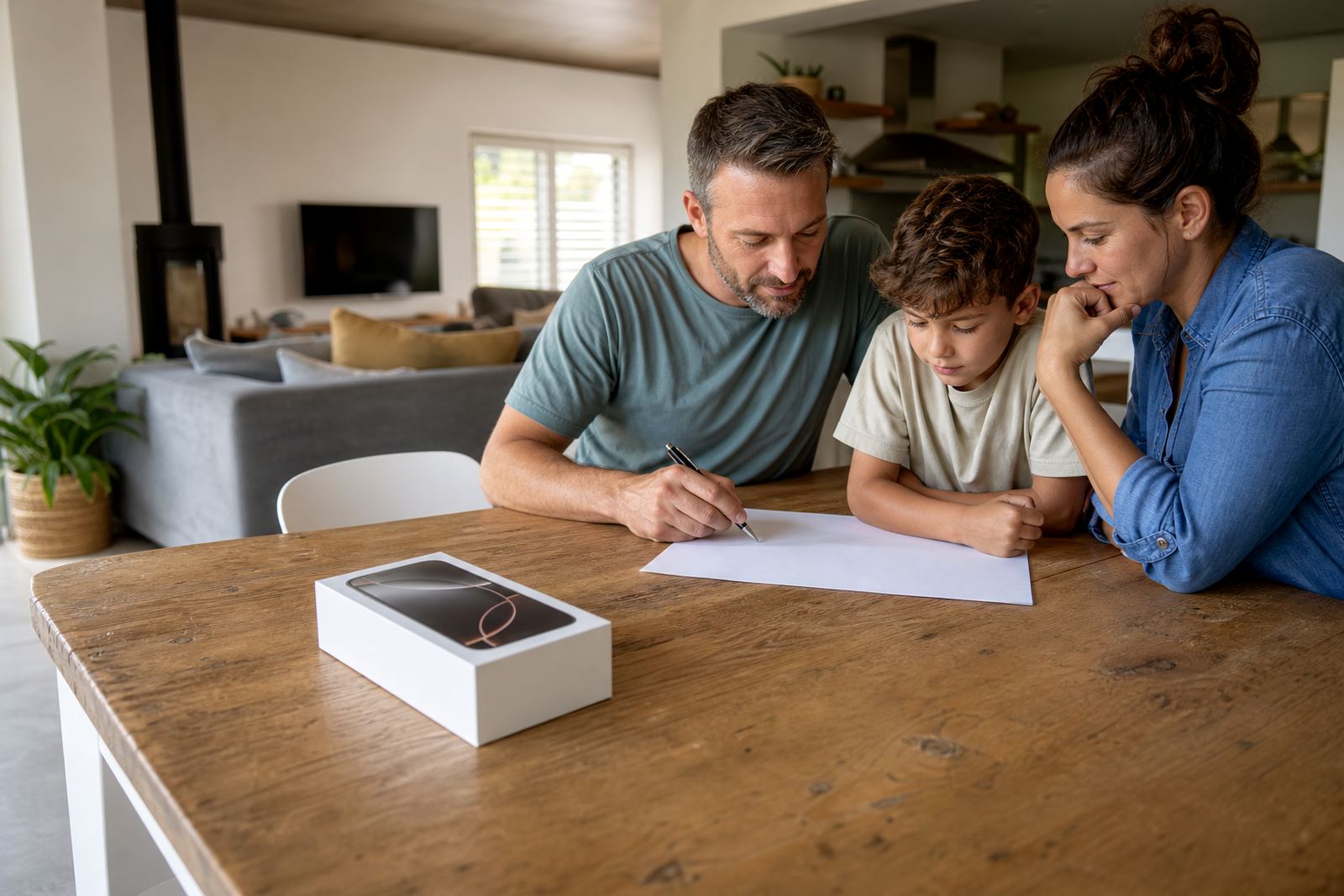
We would also build in a first phone planning step before the device rules become a problem. That gives the family a chance to agree on app access, bedtime charging, school communication and gaming expectations before frustration builds up. For families in Cape Town, Johannesburg, Durban, Pretoria or Bloemfontein, that practical starting point usually saves time later.
- Start with one shared routine map
- Use plain wording for rules and reminders
- Agree on phone planning before conflict starts
- Review the plan after a few weeks, not months
Quick facts
| Project location | Brackenfell, Cape Town |
|---|---|
| Client type | Blended household with school-age children |
| Timeline | 3 weeks |
| Main service | Family Media Plan Session |
| Support included | First Phone Planning, Sibling Fairness Session, Bedtime Routine Session |
| Core outcome | One shared screen-time plan across two homes |