

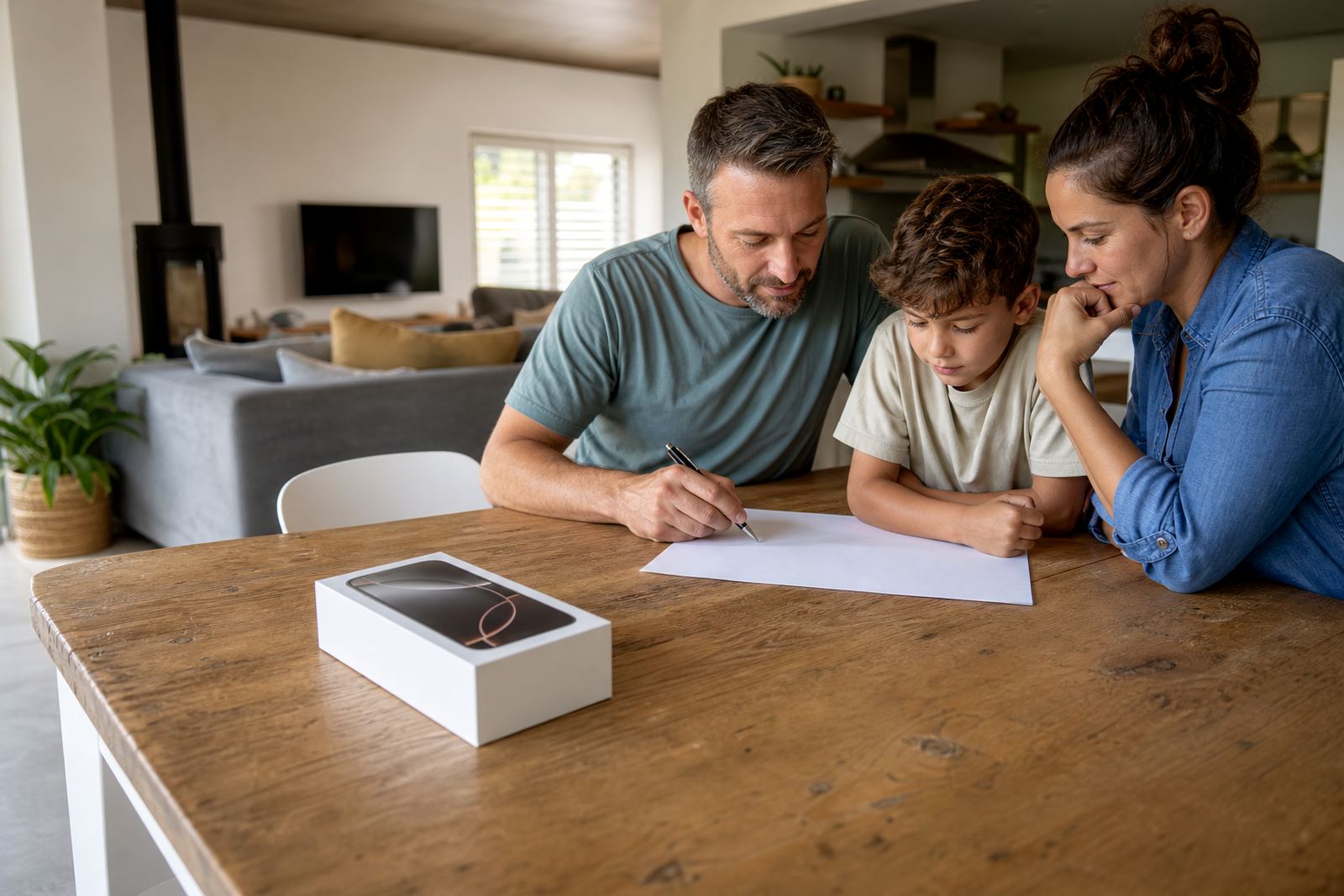



Why This Sandton Family Asked for Help
The family came to us from Sandton with a straightforward brief: their child had just received a first phone and they wanted clear rules before habits became messy. They were not looking for a lecture, just a practical setup that would suit a busy household, school runs and after-school activities.
The main concern was control without constant conflict. Mum and dad wanted the phone to stay useful for safety and contact, but not become a late-night distraction or a source of endless app requests. They also wanted grandparents and caregivers to understand the same rules, so everyone was speaking from the same page.
Because this was a first-phone project, we treated it as a planning exercise rather than a crisis fix. We focused on structure, age-appropriate boundaries and simple routines that a child could follow without needing a reminder every five minutes.
What We Needed To Work Around For Families
The family had a few limits that shaped the plan. The child needed the phone for safety on the way to sport and for after-school communication, but weekdays were already full with homework, tutoring and dinner schedules. They also wanted screen time to stay out of the bedroom at night, which is a common rule in many homes.
Another issue was consistency. One parent was stricter with app use while the other tended to give in when the child argued for more time. We had to make the rules simple enough that both adults could apply them in the same way, even on a tired Tuesday evening. That mattered more than making the plan fancy.
- School nights needed a tighter cut-off than weekends
- Calls and messages from approved contacts had to stay open for family safety
- Social apps needed to wait until the child had shown steady self-management
- Homework time and bedtime had to stay phone-free
- The plan had to work for both parents and caregivers
How We Set Up the First Phone Plan
We started with a family media plan session and turned it into a first-phone setup that covered the basics properly. That included daily screen-time limits, app access, bedtime rules, contact discussions and a simple list of what was allowed, what needed permission and what was off limits for now. The aim was not to remove the phone, but to give it a clear role in the home.
We also helped the parents think through practical safety settings, including contact approvals, location sharing where appropriate and notification control so the phone was not buzzing through dinner. The result was a setup that felt less like punishment and more like house rules the child could understand.
- Weekday limits were set lower than weekend limits
- Messaging stayed limited to approved contacts at first
- Bedtime charging moved out of the bedroom
- Social and entertainment apps were reviewed before install
- School, family and study needs were separated from free time use
The Timeline And What Changed Week By Week
The project took three weeks from first contact to final handover. In week one, we gathered the family’s routine, the child’s school schedule and the parents’ concerns. In week two, we built the first-phone rules, agreed contact boundaries and worked through the bedtime routine. In week three, we checked the setup again and made a few small adjustments after the family had tried it at home.
That short review period was useful because first-phone rules often need a bit of fine tuning once the household has lived with them. For example, one evening cut-off was adjusted to match homework completion time, and notifications were simplified so the child was not distracted while doing revision.
The family did not need a heavy-handed approach. They needed a plan that fit their actual rhythm, which is usually the part people miss when they buy a phone and hope for the best.
Results The Family Could Use Straight Away
By the end of the project, the parents had a clear structure they could point to instead of arguing from memory or emotion. The child understood when phone use was allowed, when it stopped and why the rules were different on school nights compared with weekends. That made the phone feel less like a battleground.
The family also said the bedtime routine improved because the phone was no longer part of the wind-down window. Contact expectations were clearer too, especially around who could message during the day and when a reply was expected. In a busy Sandton household, that kind of clarity saves a lot of repeating yourself.
- Fewer arguments about bedtime use
- Clearer limits for daily screen time
- Better agreement between parents and caregivers
- Safer contact rules for a first phone
- More predictable homework and evening routines
What We Would Do Again For Another First Phone
We would use the same approach again for another family because it keeps the setup practical. Start with the child’s real routine, decide what the phone is for, then build the limits around that. It is usually easier to set firm boundaries at the start than to undo habits later on.
We would also keep the discussion broad enough to include grandparents or other caregivers where needed, especially if they are collecting the child, helping with homework or supervising after school. A good first-phone plan only works when the adults around the child are using the same rules.
If there are concerns about a child’s behaviour, anxiety, sleep or attention, this kind of planning can help with household structure but it is not medical or psychological advice. Families with specific concerns should speak to a qualified professional.
Project Specs At A Glance
- Client type: Family setting up a first phone for a school-age child
- Town: Sandton, Johannesburg
- Project length: 3 weeks
- Main focus: Bedtime rules, contact lists and daily limits
- Core service: First Phone Planning with a Family Media Plan Session
- Key outcome: A simple, shared rule set for weekdays, weekends and after-hours use
Quick facts
| Client type | Family setting up a first phone for a school-age child |
|---|---|
| Town | Sandton, Johannesburg |
| Timeline | 3 weeks |
| Main focus | Bedtime rules, contact discussions and daily screen-time limits |
| Service used | First Phone Planning and Family Media Plan Session |
| Outcome | A clear household rule set for weekdays, weekends and after-hours use |