




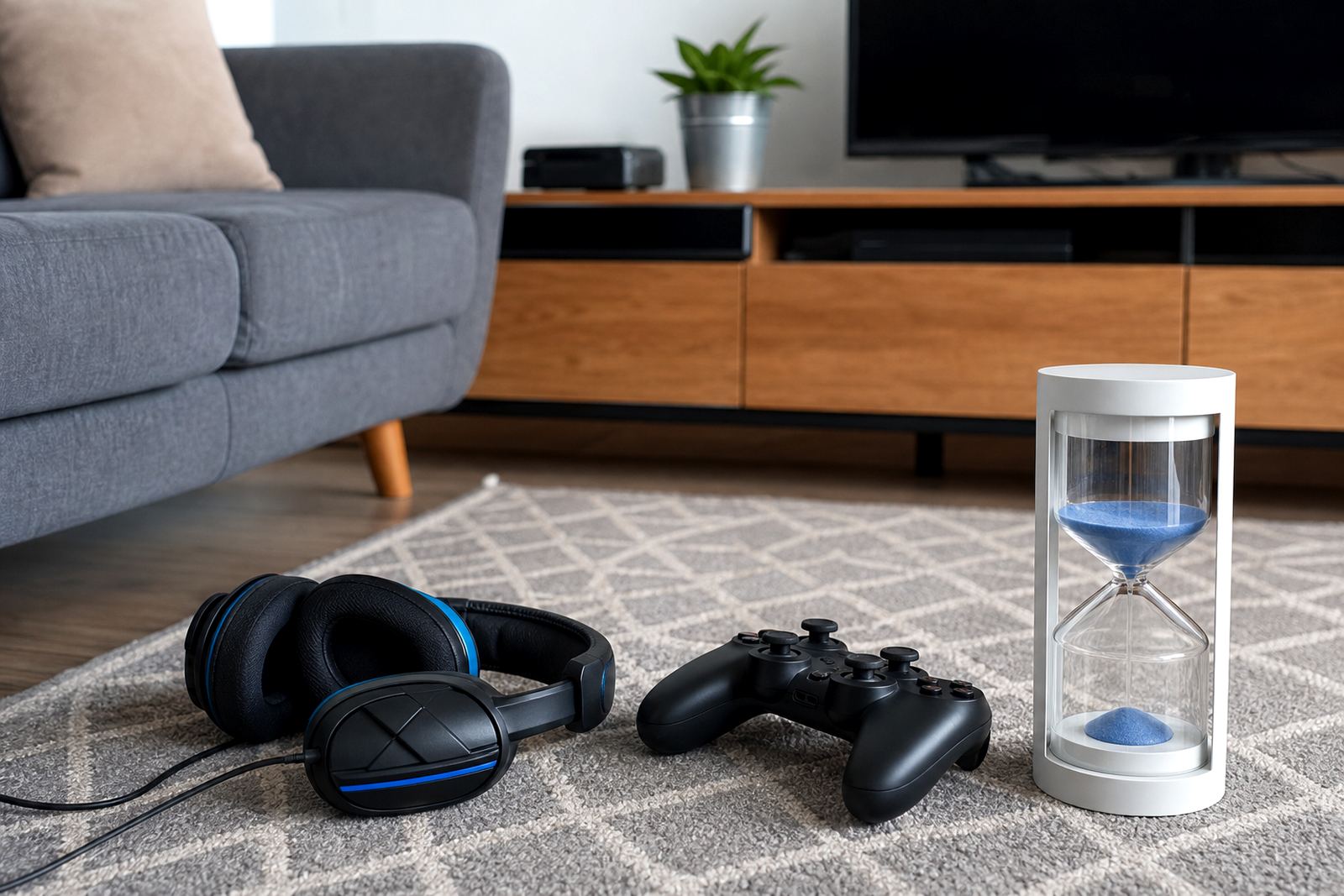
Why rainy days need a different screen plan
When the weather turns grey in Durbanville or a summer storm rolls through Johannesburg, the usual rhythm of the day can fall away quickly. School runs are off, sport practice may be cancelled and children often default to more screen time because there is less to do and fewer places to go.
That is why rainy day planning works best when it is practical and visible. Families do not need a complicated system. They need clear screen-time limits, a few offline options that are easy to start and a simple order for the day so the first hour does not decide the rest. A good plan also helps parents avoid repeated arguments about one more episode or one more game.
If your child has ongoing concerns around behaviour, sleep or anxiety, speak to a qualified professional for advice suited to your family.
Set the screen rules before the first click
Indoor days go smoother when the rules are decided before screens are switched on. That avoids negotiations at 11:30 after the second snack. Start with a short family agreement that covers when devices may be used, how long they may be used for and what happens before and after screen time.
Parental controls can help with this. Most families use them to set daily limits, restrict access at certain times and keep some content off limits. Used well, those settings are not about control for its own sake. They simply support the routine you already want.
- Choose one or two screen windows for the day, not open access all morning.
- Set a clear finish time so the device does not drift into lunch or supper.
- Keep bedrooms and meals screen free where possible.
- Use age appropriate filters and app approvals for younger children.
- Agree on what happens if the limit is used up early.
If your child has multiple devices, it can help to apply the same rules across all of them so nobody feels singled out. Families often find that consistency matters more than perfect timing.
Build an indoor menu of offline activities
Screen plans work better when there is something ready to replace the screen. Children often say they are bored when, in fact, they have not been given an easy next step. Keep a short list of indoor activities on the fridge or in a kitchen drawer so anyone can pick one without waiting for a parent to think of something new.
For Cape Town families, a rainy Saturday can mean muddy shoes, wet washing and children trapped inside while the wind blows. That is exactly when simple activities save the day. They do not need to be fancy. They need to be ready, quick and not dependent on perfect weather.
- Build a blanket fort and read inside it.
- Set up a puzzle or lego station on the dining table.
- Do a baking task that needs measuring and stirring.
- Play a card game or a board game for 20 minutes.
- Make a scavenger hunt with items found around the house.
- Try colouring, clay or cutting shapes from scrap paper.
The goal is not to replace every screen moment with organised enrichment. It is simply to make offline time easier to start, so the day has a natural rhythm rather than one long loop of videos and complaints.
Use screen time with a clear purpose
Not every minute on a screen is the same. A rainy day can include some entertainment, but it also helps to separate passive viewing from purposeful use. A child might watch a show, complete a learning activity, video call a grandparent or play a game for a set period. Each of those serves a different purpose and should sit within the family media plan.
That plan can be as simple as three questions: Why are we using the screen, how long for and what comes next? When children know the answers, there is less room for bargaining. It also becomes easier to spot when screen time is drifting from a planned activity into a habit that fills every gap.
Families in Pretoria or Bloemfontein often use rainy days to catch up on admin, school tasks or quiet work at home. In those cases, a short, planned screen slot can be useful while a parent answers messages or prepares lunch. The key is to keep the reason clear. Screen time should fit the day, not take over the day.
Keep the house calm when everyone is stuck inside
Rainy days can bring more noise, more mess and more tension. Children may be frustrated by being cooped up, while adults are trying to work, cook or manage the house. A calm plan helps the whole home feel more settled.
Start with the basics: food, movement and a rough timetable. Children often cope better when they know what happens next, even if the next step is only tea and then a game and then screen time. Short movement breaks also matter. Five minutes of stretching, dancing or a quick hallway race can reset the mood without needing to go outside.
In households with siblings, unfairness is a common trigger. One child may finish their allotted time and another may still have minutes left. That is where a family media plan can help. Rules about timing, sharing devices and turn taking should be written in plain language so everybody understands them. For families with co parenting arrangements, the same approach can reduce confusion between homes if both sides are willing to align.
A local example: a wet weekend in Durbanville
Picture a wet Saturday in Durbanville. The park is too damp, sport is off and the children are tired of being indoors by 10am. The morning begins with a one hour screen slot after breakfast, followed by colouring and a puzzle while laundry is sorted. After lunch, a second shorter screen window is set for a family film or a game, then the rest of the afternoon is split between baking and a card game at the kitchen table.
Nothing about that plan is special, but it works because it gives the day shape. The children know when screens are available and what happens in the gaps. The parent is not forced to improvise every hour, and nobody needs to argue about whether the screen should stay on until supper. That kind of simple routine can work in a flat in Cape Town, a townhouse in Pretoria or a family home in Gqeberha just as well as it does in Durbanville.
Rainy day planning is really about reducing friction. Once the routine is clear, the weather matters less.
When a family needs more than one rule
Sometimes a rainy day screen plan exposes bigger issues. A child may find transitions very hard, siblings may fight over devices every time it rains, or parents may disagree on limits. In those cases, a more detailed family media plan can help bring everyone onto the same page.
Screenage works with families across South Africa on practical screen-time coaching, parental controls and everyday routines, including first phone planning, bedtime routines, social app boundaries and holiday screen plans. The aim is not to shame families for using screens. The aim is to make screen use calmer, clearer and easier to manage at home.
If you have concerns about your child’s sleep, mood, behaviour or stress, please speak to a qualified professional. For day to day household planning, a simple plan and consistent limits can go a long way.