

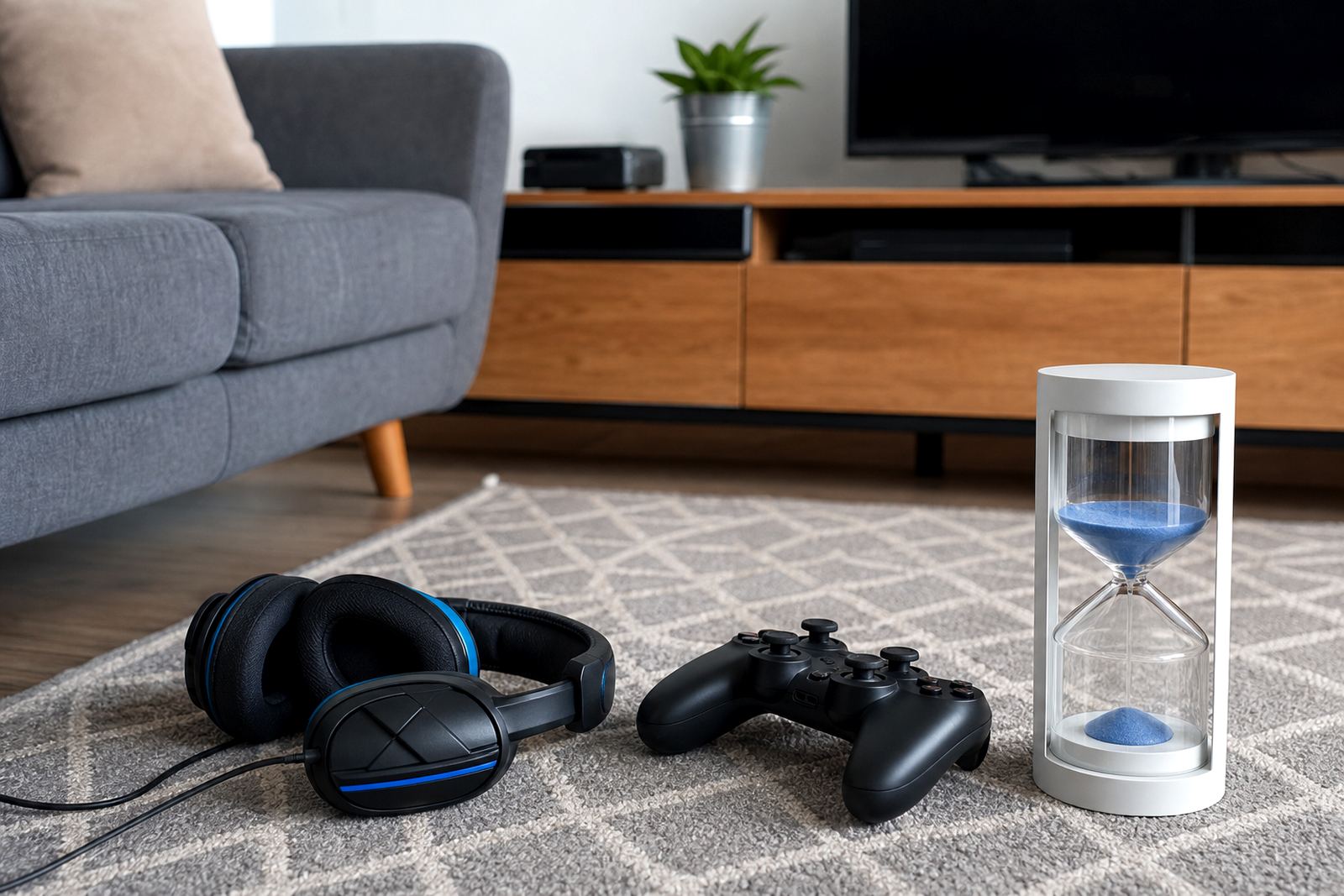


Start with a family rule about what gaming is for
The simplest place to begin is not with punishment, but with purpose. In many homes, gaming works best when it is treated as one part of leisure, not the centre of the day. That means children know when they may play, how long they may play and what must happen before and after. If the rule is clear from the start, there is less arguing later.
A short family media plan often shapes the whole mood at home. Keep it short, practical and easy to remember. For example, some families allow gaming after homework and chores, while others keep it for weekends only. The point is consistency. If the rule changes every second day, children will keep testing it, and parents end up negotiating the same thing again and again.
Set time boundaries that fit your home routine
Time limits work best when they are tied to daily routines. A school night in Durbanville is not the same as a Saturday afternoon after sport, music practice and errands. Families can choose shorter weekday sessions and longer weekend sessions, as long as the pattern is predictable. For younger children, a visible timer helps. For teens, a written agreement is often better because it removes the feeling of surprise.
- Use a set window for gaming, such as after homework or after supper
- Keep the start time and end time the same on school nights
- Avoid open-ended play where a child says, just one more round
- Link gaming time to the rest of the routine, including sleep and family meals
- Review the rule once a month, especially during exams or holidays
Think ahead about what happens when screen time ends. A calm warning ten minutes before the stop point gives children time to finish a round, save progress and switch off without drama. That small step can make a big difference in how the whole household feels.
Choose stop points that do not turn into a battle
The hardest part of gaming rules is often not the time itself, but the stop point. Children do better when they know exactly what counts as a proper ending. Finishing one round, reaching a save point or ending at a set alarm can all work. What matters is that the rule is agreed in advance and not changed in the heat of the moment.
Parents also need to be firm about what does not count as a valid extension. If a child asks for five more minutes every night, the limit is no longer a limit. Some families use a two-step approach: first a warning, then a final call. Others keep the device out of the bedroom at night, which removes the temptation to keep playing after lights out.
- Give one warning before the session ends
- Agree on a final stop point before play begins
- Keep gaming devices in a shared space at night if possible
- Do not negotiate while the game is still running
- Use the same stop rule for weekdays and weekends where you can
Use parental controls as support, not as the whole plan
Parental controls can help families back up the rules they have already agreed on. They can set time limits, block purchases, restrict chats and manage access to age-inappropriate content. But controls work best as support, not as a substitute for parenting. Children still need to understand why the rule exists and what happens if it is broken.
It is worth checking settings on each device, game account and app store. In many homes there are more than one phone, tablet or console in use, and that makes the rules easy to miss. If grandparents help with care, or if children move between two homes, the settings should be explained to everyone involved. That way there is less confusion and fewer loopholes.
A simple home rule is often enough: game in the living area, charge in a shared space, and switch off before bed.
Match gaming rules to homework, chores and sleep
A gaming rule is easier to keep when it fits the rest of the household rhythm. If homework happens late because dinner ran over, children may see the rule as unfair. If chores are never completed before the console comes on, the device becomes a point of tension. Clear expectations around order help the day run better.
A practical home setup might look like this: homework first, then chores, then gaming, then a device-free wind-down before bed. For exam periods, the rule can change for a set time and then return to normal. That is often easier than trying to fight over the same limit every night.
Families should also watch for screen use that cuts into sleep. A tired child is more likely to have tears and tantrums, and the next day gets harder for everyone. If gaming is pushing bedtime later and later, it may be time to shorten the session or move it earlier in the day.
Handle sibling conflict and fairness without favouritism
Siblings often argue about who gets more time, who started first, or whose game is more important. This is where fairness matters more than exact sameness. A younger child may need shorter sessions and more direct supervision, while an older child may be trusted with a little more independence. Explain the reason for the difference so it does not feel like favouritism.
When one child uses gaming well and another keeps pushing the boundary, the answer is not always the same consequence for both. Instead, link the next step to the behaviour that happened. If a child ignored the warning, the next session may be shorter. If a sibling kept interrupting another child, then shared play time may need tighter rules. Clear consequences, handled calmly, are often easier to accept.
This is also a good point to remind children that family time matters too. A shared meal, a walk around the block, or a chat after supper can help balance out solo screen time. You do not need to ban gaming to keep a home connected, but you do need a plan that leaves room for the rest of life.
When families need a reset, keep it simple and specific
Sometimes the old rule has stopped working. Maybe holidays changed the routine, maybe a new game is more absorbing, or maybe the family has slid into daily arguments. A reset does not have to be dramatic. It can be a short family meeting with three decisions: when gaming may happen, when it must stop and what support the parent will use to enforce the rule.
For example, a family in Durbanville might agree that school-night gaming ends at 7 pm, devices are charged in the kitchen, and Saturday is the longer play day. That kind of rule is easy to remember and easier to follow. It also gives children something predictable to work with, which often reduces the pushback over time.
If concerns about gaming are affecting schoolwork, sleep or mood, speak to a qualified professional for advice. Family rules can help with household structure, but they are not a substitute for professional support where it is needed.