



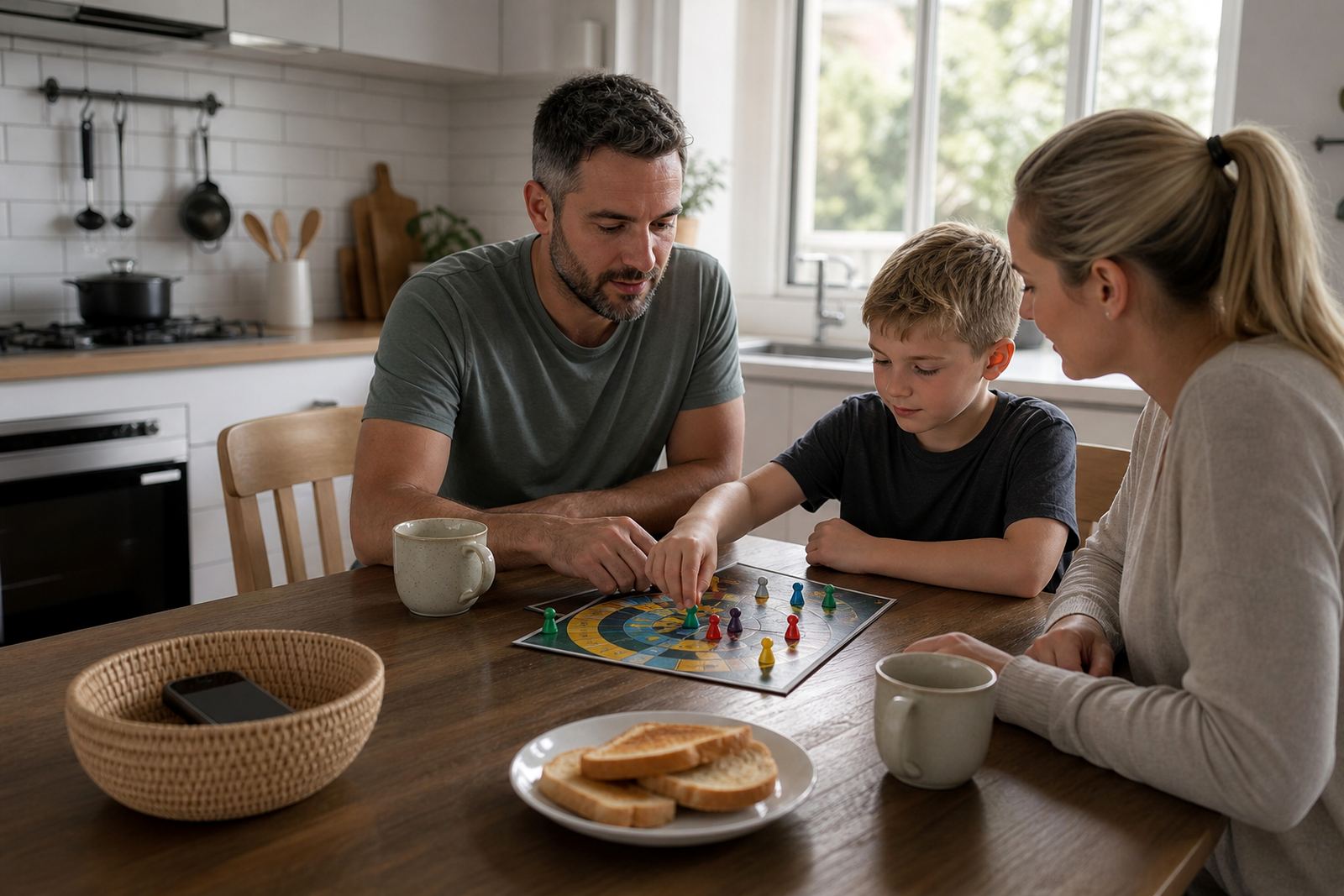

Why the handover from screen time matters
Many families find that the hardest part is not the limit itself, but the moment a child has to stop. When a device goes away suddenly, children may feel interrupted, irritated or unsure what to do next. That is why a good transition is less about winning an argument and more about setting up a predictable handover.
Screens can be useful in those busy moments, but children still need help moving from one activity to the next. The aim is to make the change steady, not dramatic.
Give a warning before the screen ends
Children usually cope better when they know a screen session is ending soon. A warning gives them time to finish a level, save their work or wrap up a video. It also reduces the feeling that the decision came out of nowhere.
- Use a 10 minute warning, then a 5 minute warning
- Say what happens next, such as snack time, homework or outside play
- Keep the message short and calm, without a long debate
- Be consistent on weekdays and weekends where possible
If a family media plan already sets screen-time limits, the warning becomes easier because children are not guessing. They know the cut-off time and they know what comes after it.
Make the next activity easy to start
Children find transitions harder when the next step is vague. It helps to have a simple follow-up ready before the screen ends. For younger children this might be building blocks, colouring or playing outside. For older children it could be a shower, reading, setting the table or starting revision for school.
Families in areas like Stellenbosch, Pretoria and Bloemfontein often tell us that the easiest change is the one that feels natural. If the next activity is already set out, there is less resistance. A book can be on the couch, a soccer ball can be by the door, or a water bottle can be ready for a short walk.
- Prepare an offline activity before the device is switched off
- Keep favourite items visible and easy to reach
- Offer two acceptable choices instead of many options
- Match the next activity to the time of day and energy level
Use parental controls as a support, not a punishment
Parental controls can help keep the boundary steady when adults are busy or tired. Timers, app limits and content settings can support the rule that the family has already discussed. They are most useful when they work alongside conversation, not instead of it.
For example, a parent might use a device limit for gaming after homework, or a bedtime setting that stops social apps late at night. That does not replace a family discussion about why sleep matters or why the same rule applies every school night. It simply helps the home routine hold together when everyone is distracted.
Screenage supports families who want a more predictable handover between screen time and the rest of the day. If concerns around behaviour, sleep or family stress are ongoing, speak to a qualified professional for advice that suits your situation.
Keep reactions steady when a child pushes back
Even with a good plan, there will be moments when a child argues, pleads or asks for just one more minute. The best response is usually calm and brief. Long explanations can create more friction, especially when everyone is tired after school or dealing with evening traffic on the way home.
Try to avoid changing the rule in the middle of the moment. If the boundary keeps shifting, children learn that the limit is negotiable every time. It can help to say the same short sentence each day, for example, the screen is finished now, and then move on to the next step.
- Stay calm and avoid raising your voice
- Repeat the same short phrase each time
- Do not open a fresh negotiation once the timer has ended
- Praise the child when they switch over well, even if it is a small success
Make transitions easier for different ages
A five year old, a teenager and a child sharing a tablet may all need different support. Younger children often need hands-on help and a visible routine. Older children may respond better to being part of the plan, especially if they help decide study times, gaming windows and how to handle weekend use.
Families with more than one child may also need a fairness check. One child may finish homework earlier, while another needs more time after sports practice. A sibling fairness session can help parents set separate limits without turning the house into a contest. It can also help children understand that different needs do not mean different values.
In South African homes, where grandparents or other caregivers may also help with after-school care, it is worth making sure everyone uses the same basic plan. That reduces confusion and gives the child one clear message, whether they are in Durban, Gqeberha or a small town outside the city.
Build a calm routine that repeats every day
The easiest screen transition is one that children come to expect. A repeatable routine turns a tricky moment into something familiar. For many families, that means a warning, a final save, a device placed in the same spot and a next activity that already makes sense.
Start small if needed. You do not need a perfect system on day one. What matters most is that the household knows what the rule is and follows it in the same way most days.
Screen-time limits, parental controls and family plans are general tools, not medical or psychological treatment. If you are worried about sleep, anxiety, school refusal or intense conflict, speak to a qualified professional for guidance.