



What changes when a child is at boarding school
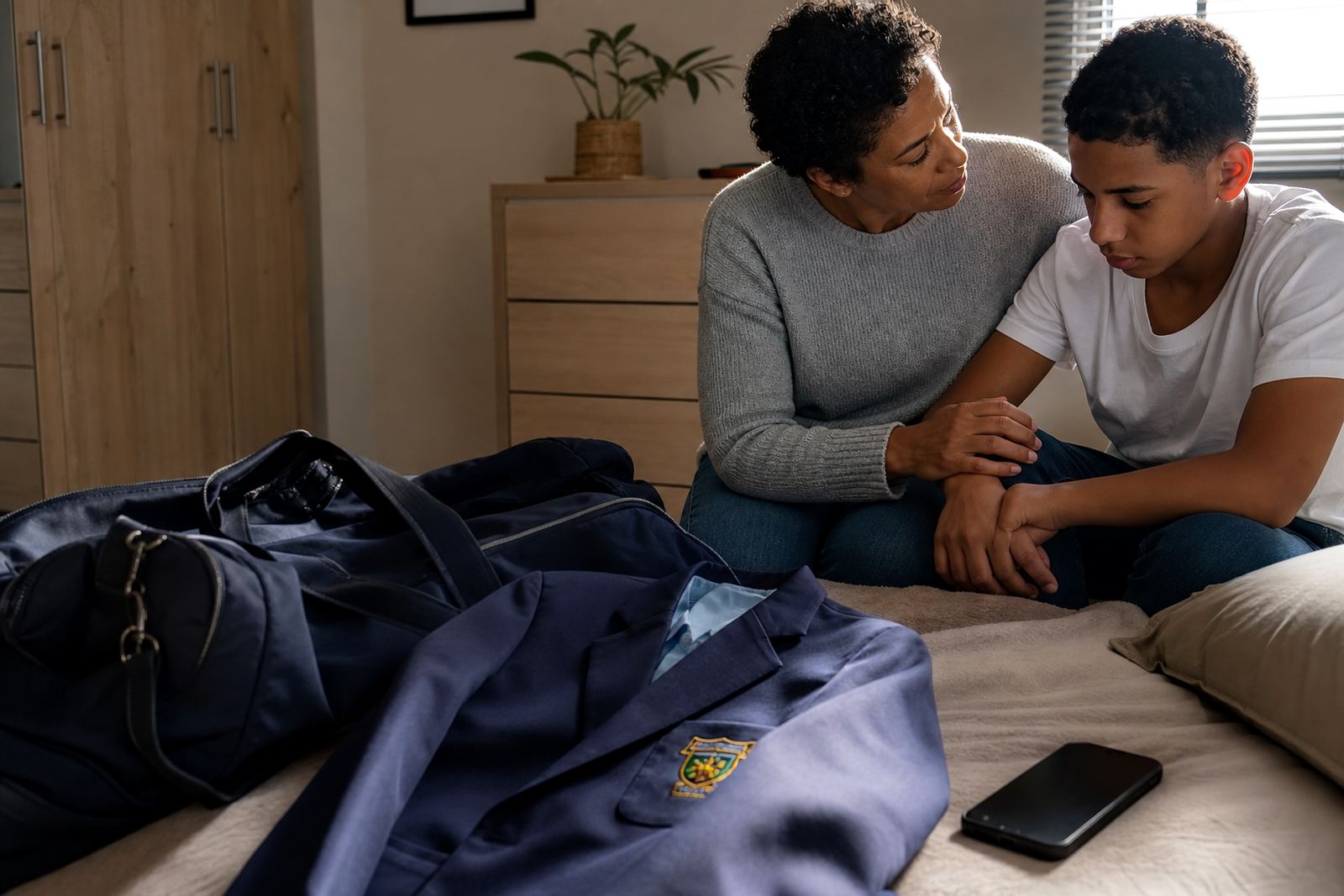
Boarding school routines are not the same as a full-time home routine, so the family media plan has to bend a bit. During term time a child may have limited weekday access, shared devices, or school-issued phones that are only used at certain hours. At home, that same child may suddenly want longer gaming sessions, more social app time and a late-night catch-up with friends. That swing can cause arguments if the household rules are not clear.
For Durbanville and Cape Town families, the other issue is travel. A child may be at school in one province, come home to the Western Cape for a long weekend, then spend half the holidays with grandparents in Pretoria or Bloemfontein. The settings need to follow the child, not the location. We usually help families write a simple plan for term time, weekends and school holidays so everyone knows what changes and what stays fixed.
- Set term-time limits that suit homework, lights out and school transport
- Allow weekend changes without removing all boundaries
- Use one rule set for all caregivers so there is no mixed message
- Keep the plan short enough that grandparents and au pairs can follow it too
Typical equipment set in a boarding school home
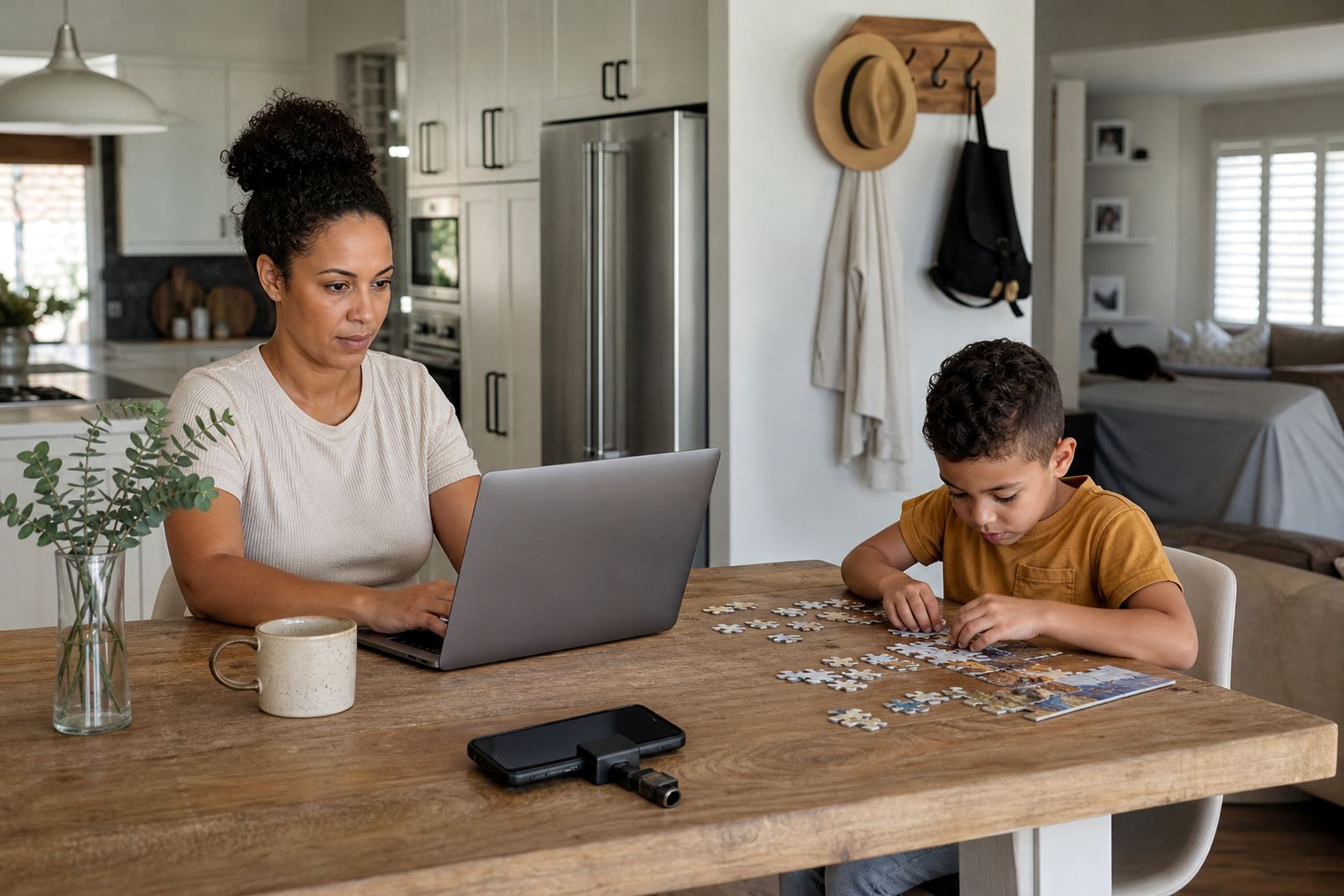
Most boarding school families are not managing one device only. There is usually a phone, a tablet, a laptop for assignments, and one or two shared household screens. Some children also have a game console at home, while others rely on a school laptop or a basic phone during the term. The issue is not the number of devices, it is the different reasons each one is used.
When we work through parental controls and screen-time limits, we usually look at the device mix first. A homework laptop should have a different structure from a bedtime phone. A gaming device should not behave like a study tool. If siblings share devices during holidays, it is worth separating accounts and setting individual time windows. That keeps the rules fair and cuts down on the usual arguments about who used what first.
- Phone for calls, messages and approved apps
- Laptop or tablet for schoolwork and reading
- Shared TV or media device in a common area
- Gaming device with its own timer and content settings
How to plan for term time, weekends and holidays
A good family media plan is not only about daily limits. It also needs a rhythm. Boarding school families usually need three profiles: term time, weekend home time and holiday time. Each profile should say when screens may be used, which apps are allowed, and what happens after bedtime. If you do not do this, children will treat every return home like a blank slate and parents end up renegotiating the same issue every month.
It helps to set offline activities into the plan as well, such as reading, sport, chores or family meals, so the screen is not the only thing filling the gap. This is not clinical advice, just ordinary household planning, and if a family has broader concerns around behaviour or stress it is best to speak to a qualified professional.
- Choose separate settings for weekdays, weekends and school holidays
- Decide where devices charge at night, preferably out of bedrooms
- List approved apps for homework, messaging and entertainment
- Agree on what happens when a child arrives home tired after travel
Sibling fairness and grandparents at home
Boarding school homes often have more than one child, and not all children are at the same school or age. That is where sibling fairness comes in. A younger child may need stricter bedtime controls, while a teen may need more time for group chats and assignment platforms. Fair does not always mean equal. It means age appropriate and easy to explain.
Grandparents are often part of the picture too, especially during school breaks in Durban, Pretoria or Gqeberha. They may be happy to help, but they should not have to guess the rules. A short written plan can say which apps are allowed, how much streaming is okay on rainy days, and whether in-app purchases are blocked. One or two clear rules are better than a long list that nobody remembers after lunch.
- Use age-based settings, not one blanket rule for all children
- Write down the bedtime rule and the no-phone meal rule
- Keep purchase controls on for every device in the home
- Give grandparents a one page summary they can actually follow
Common mistakes families make with boarders
The biggest mistake is only setting limits when the child is already home. By then everyone is tired, the child wants to catch up with friends, and the house is already noisy. Another common issue is giving a boarding school child the same late-night access every night because the family feels guilty about time apart. That usually backfires and creates a cycle of late sleep and rushed mornings.
Another error is forgetting the emotional side of transitions. A child coming home from school may want connection as much as screen time. If parents use the app only to restrict, the child may push back harder. We often suggest pairing limits with family activities like a meal, a walk or a shared game night. Not every moment needs a device. Sometimes the best rule is simply that the phone stays out of the bedroom and charging happens in the kitchen.
- Waiting until the holiday starts to define the rules
- Using the same limits for a Grade 8 learner and a matric pupil
- Letting one caregiver override the plan without telling the others
- Ignoring bedtime and then trying to fix sleep with a sudden crackdown
Budget ranges for family setup and coaching
Budget depends on how many devices need to be managed and how much help the family wants with planning. A simple home setup for one or two children, with basic screen-time limits and parental controls, can usually be kept on the lower end of the range. A more detailed plan with term-time, holiday and co-parenting settings takes more time and sits higher. If grandparents, siblings and school routines all need to be aligned, allow for a fuller session.
As a guide, many families is quoted per job for a basic onboarding and planning session, while more detailed family sessions are quoted per job depending on the number of devices and the level of coordination needed. If the family wants a full media plan with term, weekend and holiday rules written out clearly, it is wise to plan for the middle to upper end. The key is to spend once on a clear system instead of paying later with arguments and wasted time. Ask for a quote
When a boarding school family should get support
If screen use turns into daily conflict, if sleep is slipping, or if every holiday starts with a fresh argument about phones and gaming, it may be time to get help with the plan. Families in Cape Town, Johannesburg, Durban, Pretoria and Bloemfontein often come to us when the rules have become too vague or too different between homes. A structured session can reset the basics and make the household easier to manage.
Our approach is practical. We look at the child’s age, the school routine, the devices in the home and the travel pattern between term and holiday. Then we help the family decide what matters most. For some homes that is bedtime. For others it is study time, sibling fairness or keeping social apps calm over the weekends. The goal is not perfect control, just a plan that works in real life.