



Why weekend rules can be a little softer
Many South African families find that Saturdays and Sundays run differently from school days. There is no rush for uniforms, packed lunches or early alarms, so it often makes sense to relax screen-time limits a bit. That does not mean removing them completely. It usually means shifting the focus from strict minute-by-minute control to a simple family media plan that still has boundaries.
A weekend-friendly plan might allow a longer gaming session after chores, an extra movie in the evening or more flexible time for chats and music. The key is to decide in advance what changes and what stays the same. Children cope better when the pattern is clear, and parents avoid the constant back-and-forth that can happen when rules change every hour.
For families in Durbanville or elsewhere in Cape Town, this can be especially helpful on windy indoor days or when the weather turns cold and wet. A looser plan can keep everyone calm, but it should still protect sleep, meals and family connection.
Choose the limits that stay in place
Before the weekend starts, decide which rules remain firm. Most families keep a few non-negotiables in place so the home does not slide into all-day device use. These usually include bedtime, meal times and any screen-free moments the family values, such as Sunday lunch or a short walk.
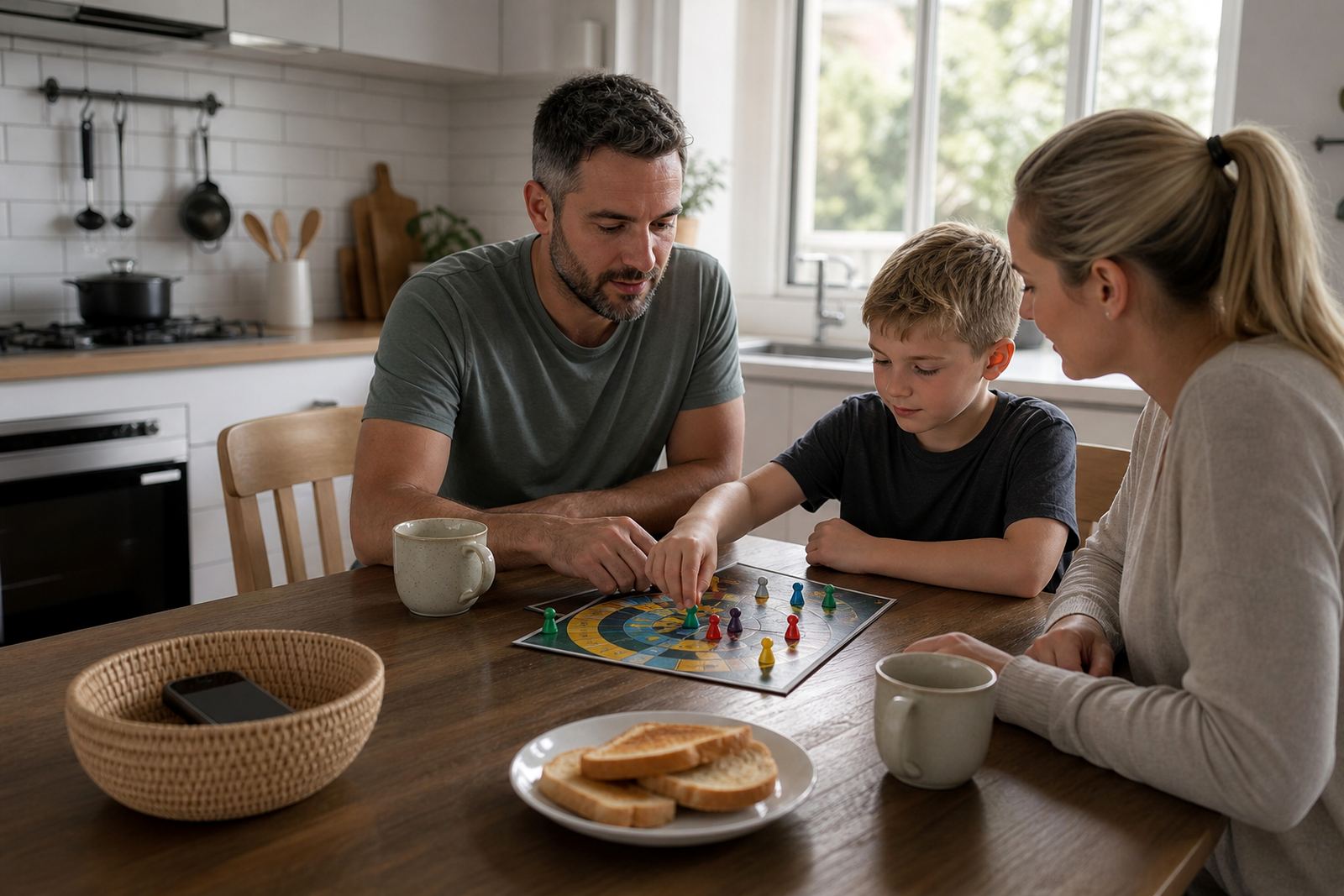
- No devices at the table during meals
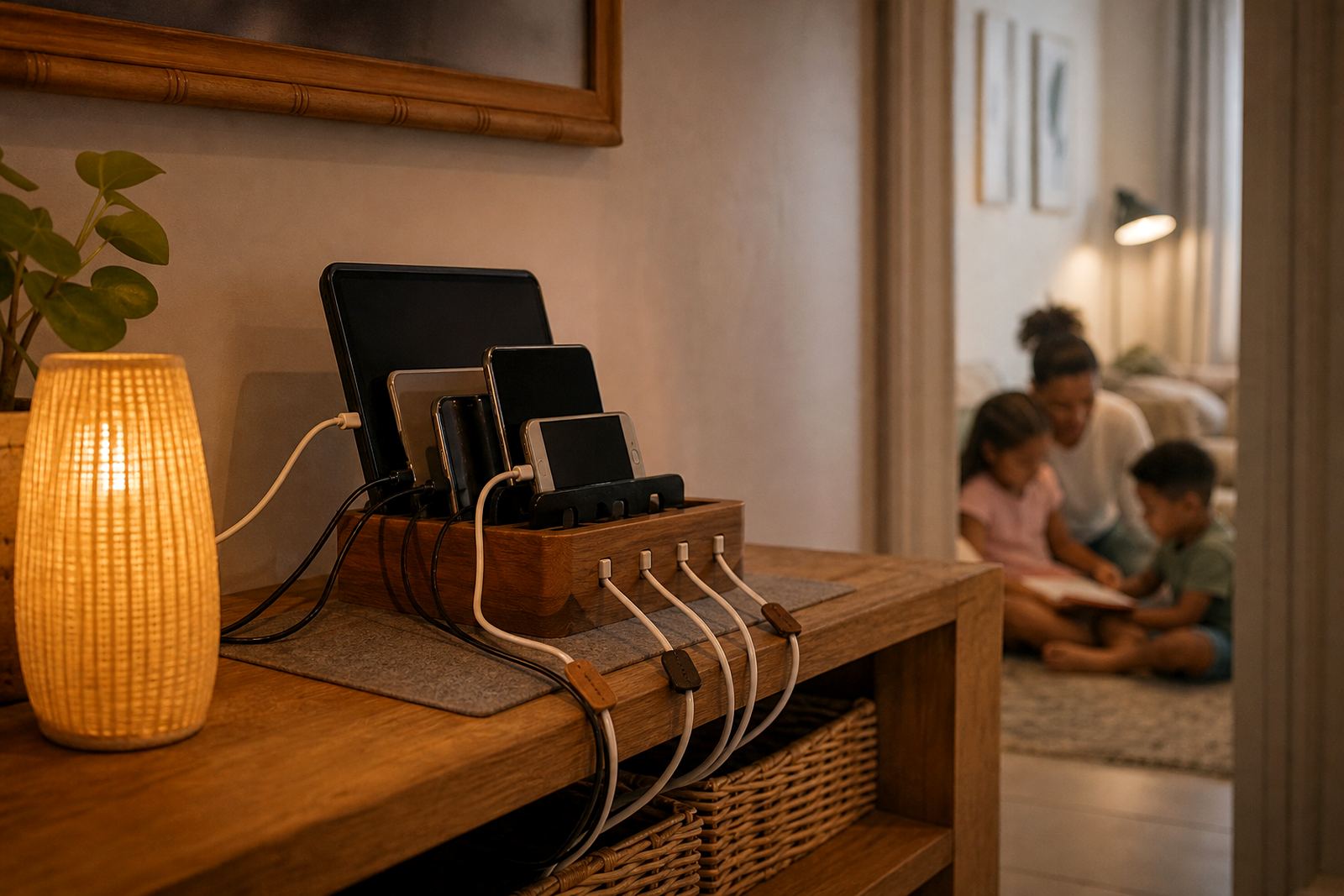
- Charging phones outside bedrooms overnight
- One agreed cut-off time for gaming or social apps
- Homework or reading before extra screen time for school-age children
- Adult review of new apps, chats or account changes
Parental controls can support these limits by setting app timers, content filters and downtime schedules. If you use shared tablets or televisions, it helps to keep the rules visible on the fridge or in a family chat so everyone knows what counts as weekend freedom and what does not.
Build flex time into the day
Instead of giving unlimited access, many parents use a small block of flex time. That can mean an extra hour on Saturday morning, or a longer stretch after outdoor play, sport or a visit to grandparents. This gives children some choice without handing over the whole day.
A simple approach is to divide the day into zones:
- Morning: chores, breakfast, exercise or reading first
- Afternoon: one planned screen session or a shared family movie
- Evening: quieter use only, with devices off before bed
Families often find that this works better than saying yes or no to every request. It reduces arguing, and it also helps children learn to plan their time. If your child spends a lot of time on one app during the week, the weekend can be a good moment to allow a little more freedom while still using a timer.
Make room for shared viewing and family connection
Weekend flexibility works best when some screen time is shared, not hidden away in separate rooms. A family film, a sports match, a cooking video or a game played together can turn device time into something social. That is often easier for younger children, but teenagers benefit too when they see screens as part of family life rather than only a private escape.
Try keeping one part of the weekend for shared media use. That might be Saturday afternoon after errands in Stellenbosch, or Sunday evening before the school week begins. A shared plan does not need to be complicated. The point is to make space for talk, laughter and a bit of planning around what everyone will watch or play.
If there are siblings of different ages, it helps to rotate turns fairly. One child may choose the movie this week and another next week. That small structure can prevent the usual complaints about unfairness and helps each child feel seen.
Use weekend rules to support sleep and school readiness
Loose weekend rules can easily turn into late nights and difficult Monday mornings. That is why many parents keep a clear bedtime routine even when the rest of the day feels relaxed. Blue light, excitement and endless scrolling can all make it harder for children to wind down, so it helps to bring screens to a stop before sleep.
A practical way to do this is to set a device shut-off time that is earlier than bedtime. For example, phones and tablets can be parked in a family charging spot while the last part of the evening stays screen-free. This gives children time to shower, read, chat or get ready for Monday without the pull of one more video.
- Set a clear warning before screens end
- Keep chargers out of bedrooms if possible
- Use night settings and app timers where needed
- Make Monday prep part of Sunday evening
This is not medical or psychological advice. If sleep problems, conflict or anxiety around screen use are becoming hard to manage, speak to a qualified professional.
Talk through special weekends before they happen
Holiday weekends, birthdays, family visits and long rains often call for a different plan. Rather than deciding in the moment, talk through the change before the weekend starts. That way children know whether the routine is more relaxed, and parents can avoid saying yes to everything just because the day feels unusual.
Some families use a simple rule: if the weekend has a special event, there can be extra screen time after the event is done. Others choose a single movie night, one gaming block or a later bedtime with stricter app limits. The important thing is to keep the change temporary and specific.
In Durban, Pretoria or Bloemfontein, for example, a rainy public holiday may mean more time indoors than usual. A good plan might allow a film after lunch, then a walk, visit or board game later. That gives the day structure without making it feel like school.
Keep the reset simple for Monday
A weekend plan works best when Monday is easy to restart. If rules were softer for two days, do a quick reset on Sunday evening rather than waiting for Monday morning stress. Let children know what returns to normal, and remind them of any school-night limits before devices go back to their usual schedule.
Many families do a short check-in once a week. Ask what worked, what felt fair and what caused tension. That can be as simple as, “Was the weekend plan okay, or should we adjust the time limits next week?” These small conversations make it easier to build a routine that suits the family instead of forcing one rigid rule all year.
Weekend flexibility is not about giving up control. It is about using screen time with purpose, so the family gets rest, connection and a bit of breathing room without losing the structure that keeps the week on track.