




Start With Respect, Not a Lecture
Teenagers usually switch off fast when a talk sounds like a punishment speech. Start by saying why you want the conversation, and keep it plain: you want better sleep, fewer arguments at home, and clearer rules around phones, games and social apps. That keeps the focus on family life, not control for its own sake.
Teens usually respond better when they are included in the rules. You are still the parent, but a respectful tone goes a long way. In Durbanville homes, where after-school sport, homework and family time all compete with screen time, a short direct chat often works better than a long sermon.
Agree on the Main Problem Before You Set the Limit
Before you talk about minutes or app blocks, decide what problem you are actually trying to solve. Is it bedtime scrolling, gaming too late, sneaky use during homework, or constant checking of notifications? Once the issue is clear, the rule becomes easier to explain and easier to follow.
- Pick one or two main concerns first, not every habit at once.
- Explain the reason in ordinary language, such as sleep, focus or family time.
- Link the rule to a routine, like no phone in the bedroom after lights out.
- Keep the limit specific, for example one hour of social apps after homework.
Teens are more likely to listen when they hear a real reason. If the rule changes because of exams, sport practice or weekend plans, say so clearly. That feels fairer than a sudden surprise. It also gives you a chance to show that screen rules can shift with life, not just with moods.
Use Clear Language and Avoid Hidden Messages
Many conflicts start because parents mean one thing and teens hear another. Try to say exactly what you mean. Instead of saying, “Use your phone less”, say, “No social apps during supper and homework, and your phone stays in the kitchen after 9 pm”.
Clear wording reduces room for debate later. It also helps if you keep the tone steady. If a teen feels you are accusing them of being lazy, rude or addicted, the conversation is usually over. Focus on behaviour, not character. This is not medical or psychological advice, and if screen use is affecting mood, sleep or school in a serious way, speak to a qualified professional.
- Use short sentences and one instruction at a time.
- Avoid sarcasm, threats or comparing siblings.
- Say what happens if the rule is broken, and what happens if it is followed.
- Keep the consequence connected to the screen issue, not something random.
Build a Family Media Plan That Covers Real Life
A good family media plan is not just a list of bans. It should cover weekdays, weekends, homework, sleep, meals, holidays and special events. If you have more than one child, make room for age differences too. A 13-year-old and a matric learner will not need the same limits.
This is where a practical tool can help. Families often do better when the plan includes device-free times, app categories, and a simple way to review the rules every few weeks. That keeps things from drifting. If your family in Johannesburg or Pretoria has late traffic, extra lessons, or long commutes, the plan can reflect that instead of pretending every day looks the same.
- Set device-free times for meals and bedtime.
- Define where phones can and cannot be used at home.
- Agree on which apps or games need extra limits.
- Write down what changes during exams, holidays or trips.
Listen for What Your Teen Is Actually Worried About
Sometimes the fight about screen time is really about something else. A teen may worry about being left out of group chats, losing streaks in a game, or missing updates from friends. If you hear that concern, you can respond to the real issue instead of only repeating the rule.
Try asking a few honest questions: What feels unfair? Which rule is hardest to follow? What would make it easier? That kind of talk does not mean the limit disappears. It means you are gathering useful information. Parents often discover that one small change, such as allowing a short check-in window after homework, reduces drama quite a lot.
Anele may push back, Sibusiso may grumble, and that is normal in a family home. The point is not perfect agreement, it is a working arrangement that everybody can live with most days.
Use Local Routines to Make the Rules Easier to Keep
South African family life has its own rhythm. A rule that works in theory may fail if it ignores those practical details.
A teen in Bloemfontein may need a different homework window because of sport training and early mornings. The same principle applies in Cape Town, Durban, Gqeberha and Stellenbosch: make the rule fit the household, not the other way around.
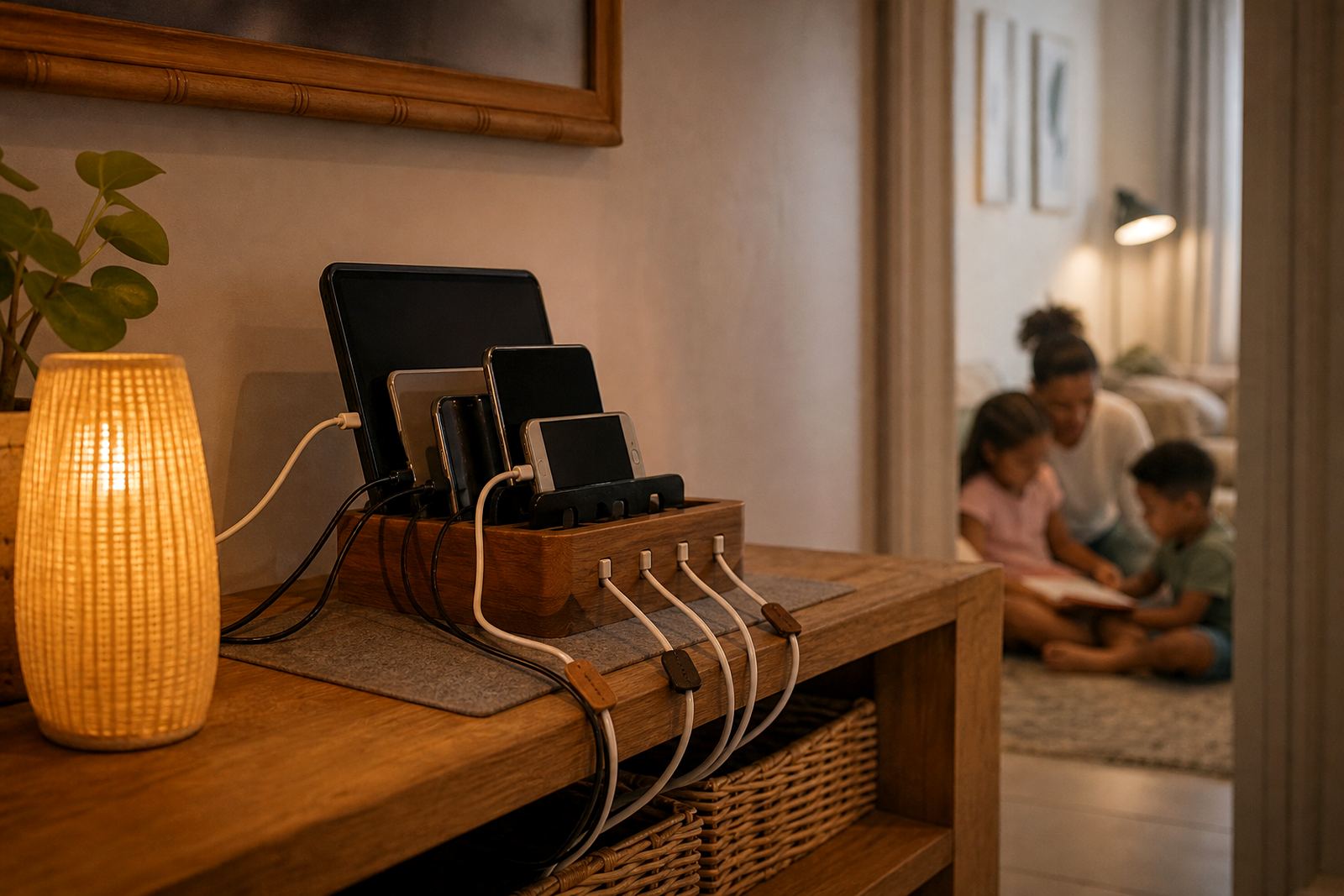
- Keep chargers out of bedrooms if late-night scrolling is a problem.
- Use school nights and weekend nights differently where needed.
- Review the plan after exams, holidays or a big routine change.
End the Conversation With One Small Next Step
Do not try to solve every digital habit in one sitting. Choose one rule, one boundary, or one check-in point to start with. That could be bedtime, gaming after homework, or social app use at meals. Small, clear changes are easier to keep than a long list that nobody remembers.
End by asking what your teen understood and what needs a follow-up chat. If you can both repeat the main rule in the same words, you are in a good place. Families who do this often find that screen rules become less of a battle and more of an ordinary part of home life. The aim is not perfect behaviour, it is steadier habits and better respect on both sides.