

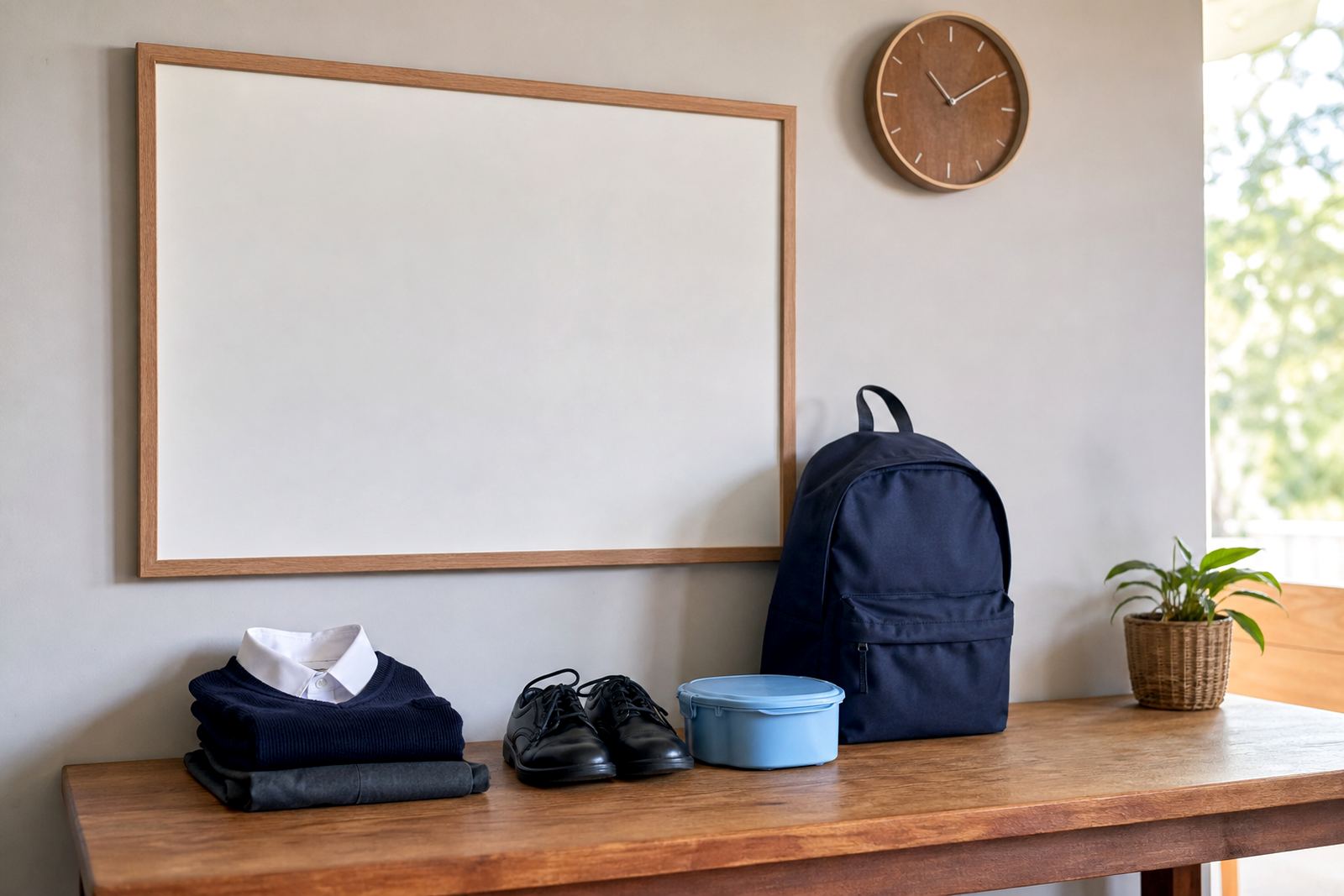



Why weekday routine matters more than one-off rules
Many families are strict for a day or two, then the routine slips once work gets busy, traffic runs late or tired children ask for just a few more minutes. That is where weekday structure helps. It gives children a simple pattern to follow, so the rules do not change every evening.
When screen limits are tied to daily routines, they feel less like a punishment and more like part of the household rhythm. A family in Durbanville may use the same order each weekday: snack, homework, screen time, dinner, and then a final wind-down before bed.
The aim is not perfect control. It is to make the limits clear enough that children know what is expected and parents do not have to negotiate from scratch every night.
Build the evening around fixed anchor points
Weekday structure works best when you use anchor points that stay the same. These are the parts of the day that do not move much, even if homework takes longer or traffic is heavy on the way home from school.
- Set a regular time for homework or reading before entertainment apps open.
- Keep family meals screen-free where possible, even if it is only 20 minutes.
- Choose a cut-off time for gaming, social apps and streaming before bed.
- Decide which devices stay in shared spaces after supper.
- Use the same bedtime reminder each night so children are not surprised.
If your child attends aftercare in Cape Town or gets home late from sport in Pretoria, the timing can shift a little, but the order should stay familiar. That order is what makes the limits easier to remember and easier to follow.
Use parental controls to support the plan, not replace it
Parental controls can help enforce the weekday plan, but they work best when they support a family decision rather than make it for you. Time limits, app access windows and bedtime lockouts can reduce the need for repeated reminders after a long day.
For example, a parent can set entertainment apps to close at a fixed hour on school nights, while learning apps remain available for study. A teen in Johannesburg may need access to a messaging app for group assignments, but not to gaming or video apps until late at night. That sort of arrangement keeps the rules practical.
- Use age-appropriate access for different children in the same home.
- Separate homework tools from entertainment tools where possible.
- Check that bedtime settings match the school timetable, not only the child’s preference.
- Review the settings after exams, holidays or sports season changes.
The point is to make weekday limits easier to apply when everyone is tired. It also removes some of the arguing that can happen when children ask for one more episode or one more game.
Make the plan fair for siblings with different needs
One of the hardest parts of weekday screen planning is keeping it fair when children are different ages. A younger child may need shorter access times and closer supervision, while a teen may need more freedom for schoolwork and communication. Fair does not always mean identical.
Families often find that sibling fairness improves when the rules are explained by purpose. One child may use a tablet for reading and revision, while another uses a phone for messaging and homework updates. If each child understands why the limit exists, there is less feeling that someone else is getting special treatment.
This can matter in homes where grandparents help after school or where one parent manages weekdays and another manages weekends. In those cases, a simple written family media plan helps everyone stick to the same expectations, even if the routine is shared across different adults.
Plan for supper, homework and the final hour before bed
The last part of the day is often where limits break down. Children get tired, parents are clearing the kitchen, and everyone wants the evening to feel easy. Yet the hour before bed is exactly where weekday structure can make the biggest difference.
Try setting a predictable sequence for that final stretch:
- Finish homework or revision first.
- Allow a short, agreed screen period if it fits the schedule.
- Switch off entertainment devices before bath time or bedtime prep.
- Keep chargers and devices out of bedrooms if that suits your household.
- Use a quiet activity, such as reading or drawing, to settle the night.
In coastal towns like Durban, humidity and warm evenings can keep children awake longer, so a calmer final hour helps. In colder winter months in Bloemfontein, families may prefer a tighter routine because the evening feels shorter. The details can change, but the structure stays the same.
Keep the week flexible without dropping the rules
A good weekday plan should survive ordinary disruptions. The answer is not to abandon the routine, but to have a simple backup version ready.
If a child has extra homework, the screen allowance can be moved, not removed, as long as it stays within the same limit. That teaches children that rules can be managed without becoming loose.
- Keep one backup evening routine for interrupted school nights.
- Agree on what happens when homework takes longer than expected.
- Use short, clear reminders rather than repeated warnings.
- Review the plan every few weeks, especially at the start of a school term.
Weekday consistency is not about being strict for the sake of it. It is about making the household easier to run, so the family spends less time arguing and more time settling into the evening.