

Why preschoolers do better with a set pattern
Young children usually cope better when screen use happens at the same time, for the same reason, and for a clear amount of time. A simple routine reduces the back and forth of “just one more” and helps children know what comes next.
For preschoolers, the goal is not to make screens a battleground. It is to keep them predictable. A child who knows that screen time follows lunch, or happens after bath time on Fridays, is less likely to argue at the last minute. The routine also gives adults a fair way to say no without having to negotiate every day.
Screen routines are even more useful when grandparents, au pairs or other carers help with the children. Everyone can follow the same rule, which keeps things steady for the child and easier for the adults.
Set limits that a preschooler can actually understand
At this age, long explanations usually do not help. Short rules work better. Children can understand simple ideas like “one show only”, “after lunch”, or “we stop when the timer rings”. The more consistent the wording, the easier it is for them to follow.
Many families find it useful to decide on the limit first, then explain it in plain language. That way the parent is not deciding in the moment while the child is tired or upset. A routine is easier to keep when the boundary is written down and shared with everyone who looks after the child.
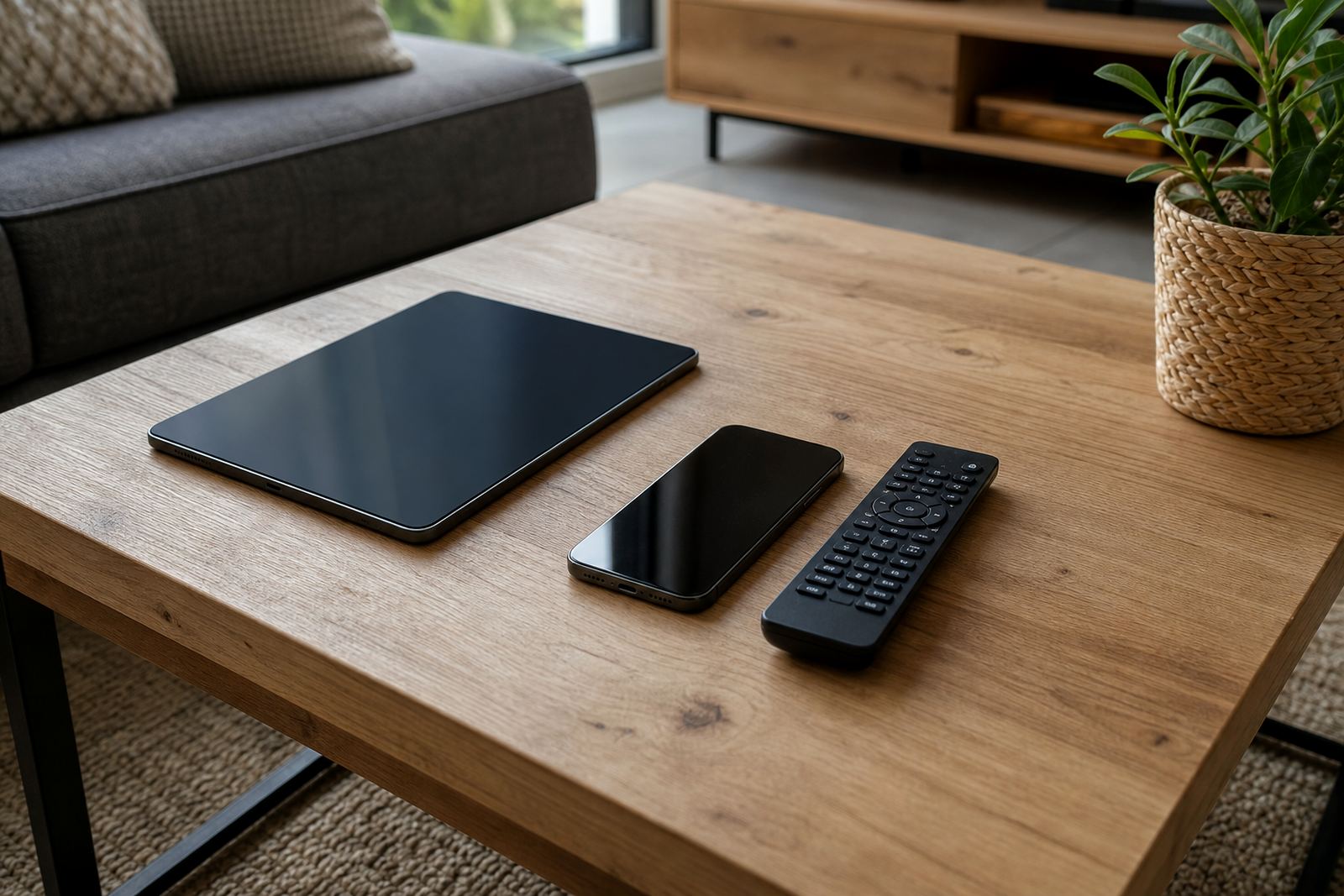
For screens used around the home, parents can also think about location. A child sitting on the couch with an adult nearby is easier to supervise than a device used alone in a bedroom. Keeping screens in shared areas makes it simpler to notice what is being watched and when it is time to switch off.
- Use time-based limits for short viewing periods, such as 15 to 30 minutes, where suitable for the family.
- Prefer parent-approved content that is slow, age-appropriate and easy to pause.
- Avoid using screens as the only way to calm upset or keep a child busy for long stretches.
- Keep the device out of the bedroom during the day, if possible.
Make transitions easier before the screen goes off
The hard part is often not the screen itself but the stop. Preschoolers can find transitions difficult, so it helps to give them warning before the device is turned off. A gentle countdown gives the child time to finish watching and start shifting attention to the next activity.
A child who is already used to closing off screen time with a set routine is easier to guide when the day is disrupted.
Keep the next activity simple. If the screen ends and the child is expected to move straight into play, snack time or bath time, say so in advance. The clearer the next step, the less resistance you usually get. It does not have to be fancy, just steady.
- Give a 5 minute warning, then a 2 minute warning, then switch off.
- Use the same phrase each time, such as “screen time is finished now”.
- Move straight to an agreed next activity, like colouring, puzzle play or outside time.
Use parental controls as support, not as punishment
Parental controls can help families keep a routine without having to watch every tap. They can limit access by time, block apps that are not suitable, and reduce accidental access to content that was never meant for a preschool child. That support can be useful when a parent is cooking, working from home or helping another child with homework.
Controls work best when they match a real family plan. If the rule is “no videos before school”, then the settings should support that. If the rule is “one short session after lunch”, the device should close automatically when the session is done. The point is not to catch a child out. It is to make the household rule easier to keep.
Families often need a different setup for weekdays, weekends and holidays. A clear family media plan can cover all of that in one place so the same rule does not have to be explained over and over again. That is especially helpful for parents sharing care between two homes, or with help from a grandparent in Stellenbosch or Gqeberha.
A simple family media plan for busy South African homes
Most families do better with a short plan than a detailed one. It just needs to answer the basics: when screen time is allowed, where it happens, who decides, and what happens when a child wants more. When that is written down, the household becomes less reactive and more steady.
A practical plan for preschoolers might include the following points:
- Screen time happens only after a set daily routine, such as lunch or afternoon snack.
- One adult is responsible for switching it on and off.
- Devices stay in shared living areas, not bedrooms.
- Only approved shows, games or songs are used.
- Screen time ends before dinner, bath time or bedtime wind-down.
For parents in Durbanville, the reality may be different from families in Pretoria or Bloemfontein, but the principle stays the same. The routine should fit the home, not the other way around. If your family is stretched across working hours, school schedules and different carers, keep the plan short enough that everyone can actually follow it.
When to get extra support with screen routines
Most families can improve screen routines with a clearer plan and a few steady boundaries. But if screen use is causing constant conflict, sleep issues or big distress, it may help to speak to a qualified professional about the wider picture. The ideas here are for everyday family use, not medical or psychological advice.
Some parents also need help simply getting everyone on the same page. That can include a parent in one home, a co-parent in another, or a grandparent who has different ideas about devices. A family media plan session can help set expectations for preschoolers, while keeping the rules practical for everyday life.
When the routine is simple, consistent and parent-led, it is easier to keep things calm.