




Why the dinner table needs a clear device rule
If every meal starts with a phone check, the table can become another place where everyone is half present. A clear no-phone rule for breakfast, lunch or supper gives children a predictable boundary and helps adults model the same behaviour. It does not have to be complicated. The rule can simply be that devices stay off the table and out of reach until the meal is finished.
For families in Durbanville or anywhere else in South Africa, the pressure is familiar. One parent arrives late from the N1, another is replying to messages from the office, and the children want one more video before supper. A small routine makes it easier to stop the habit before it starts, and it saves the usual argument about who is allowed to keep a screen at the table.
Set the rule before everyone sits down
The best time to talk about meal-time boundaries is not mid-bite. Explain the plan before the food comes out, then keep it simple and consistent. If the rule changes from day to day, children learn to test it. If it is steady, they learn what to expect.
- Choose one clear rule for all family meals, such as no phones at the table.
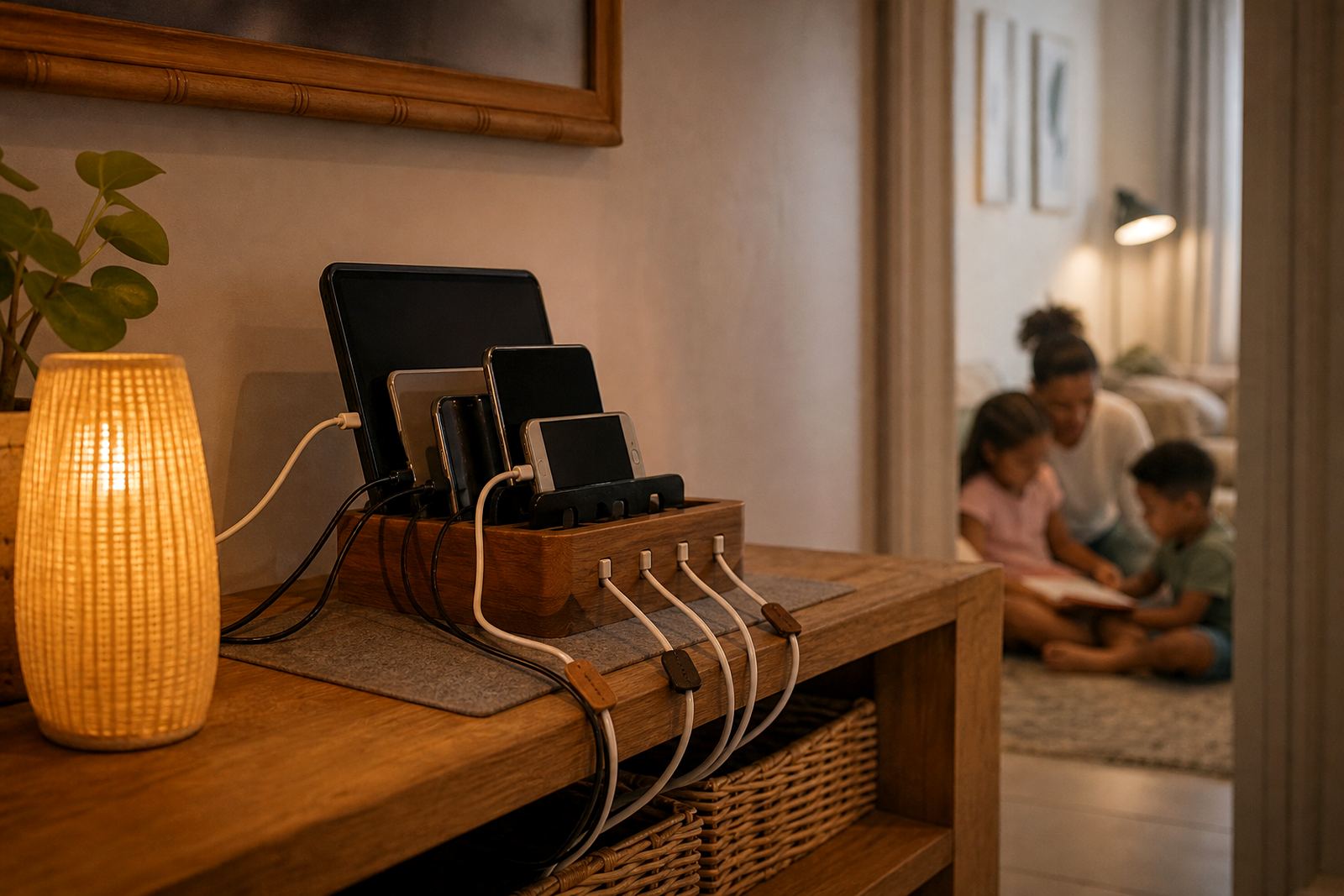
- Put devices on charge in another room or in a basket near the kitchen door.
- Use the same expectation for adults and children, even on busy evenings.
- Allow one exception if someone is on call for work, but keep that exception rare.
- Tell visitors about the rule so there is no confusion when cousins or grandparents join in.
Families often find that the rule works better when it is framed as a shared habit, not a punishment. That small shift makes it easier for teens to accept, because they can see it as part of family culture rather than control for the sake of control.
Make the first ten minutes device-free and see what changes
If a full no-phone meal feels too hard at first, start with the first ten minutes. That is often enough time for everyone to settle, serve food and talk about the day. Once the habit feels normal, extend it to the full meal. The aim is to create a pocket of calm where no one is trying to answer messages or scroll while eating.
Some families use a small checklist that sits on the fridge or inside a kitchen cupboard:
- Phones off the table before food is served.
- TV muted or switched off if it is usually on during supper.
- Children place tablets, watches and earphones in a basket.
- Parents avoid checking work chats until everyone has finished eating.
If the meal is only 20 minutes long, protecting that time matters all the more.
Use meals to teach manners, not just limits
Screen-free meals are about more than taking things away. They are also a chance to practise ordinary table habits like waiting, listening, passing food and holding a conversation without interruption. Children usually copy what they see, so if adults are still reaching for phones between mouthfuls, the message gets muddled.
Try simple prompts that keep the conversation going without turning supper into a lecture. You could ask what made the day easier, what was difficult, or what everyone is looking forward to tomorrow. Younger children often respond better when the questions are short and specific. Older children may open up more if the adult is relaxed and not probing too hard.
If the meal is quiet at first, that is normal. Families do not need to perform conversation every night. The goal is to create room for it, not force it.
When siblings argue over screen time, start at the table
Meal times often expose the same tensions that show up elsewhere in the house. One child thinks a sibling is always online, another feels left out of the family chat, and someone accuses the other of getting special treatment. A fair phone rule at meals can reduce some of that tension because the same standard applies to everyone.
For families in Johannesburg, Pretoria or Bloemfontein, where daily schedules can be tight and after-school time is limited, the table may be the only part of the day when everyone is in one room at once. Using that time well matters. It helps to agree on who is expected to put devices away, where they will be kept, and what happens if someone breaks the rule. Keep the response calm and predictable rather than dramatic.
- Use the same consequence each time, such as device time being paused after supper.
- Avoid long debates in front of the food.
- Return to the rule later when everyone is calm.
- For co parenting homes, agree on one shared expectation so the children hear the same message in both houses.
A Durbanville supper example that feels ordinary, not strict
Consider a family in Durbanville preparing supper after a winter afternoon of sports, traffic and homework. One child wants to catch up on messages, another is gaming in the back room, and a parent is tempted to answer work mail before the food gets cold. Instead, they put all devices in a bowl near the kettle, switch off the TV and sit down for 25 minutes without screens.
At first, there is some grumbling. Then someone mentions a class project, another talks about a friend from Stellenbosch, and the parent remembers to ask about a weekend plan in Gqeberha. Nothing dramatic happens, but the meal feels calmer and the children get used to the idea that supper is not screen time. That is often enough to start a better habit.
If your family needs extra support, a family media plan session can help you decide where the boundaries should sit at meals, after school and before bed. It is not medical or psychological advice, and if concerns about behaviour or wellbeing are serious, speak to a qualified professional.
Keep the rule linked to the bigger family media plan
Meal-time limits work best when they are part of a wider plan, not a one-off rule that only appears when everyone is already tired. Families can also look at first phone planning, bedtime routines, study time and gaming time so the whole week feels more predictable. That way the no-phone meal is not an isolated battle, but one piece of a clear family approach.
For parents who want a simple starting point, this checklist is often enough:
- Agree on where devices live during meals.
- Decide which meals are screen-free every day.
- Set one routine for visitors, grandparents and sleepovers.
- Review the rule after two weeks and adjust if needed.
- Keep it practical, because a rule that is too complicated will not last.
When family meals become more connected, the house can feel less rushed and more orderly. That is usually what people want anyway.