




Why nights need firmer screen rules
Even in a home with fair daytime limits, the evening can become the hour when everything slips. A child says they are only checking one message, a teen starts one more round of a game, and a parent is still answering work chats after supper. By the time the lights go off, everyone is more tired and less willing to negotiate.
That is why after-lights-out rules should be simpler than daytime rules. At night, families usually need fewer choices, not more. The goal is not to punish anyone. It is to make the end of the day predictable so that school mornings, work mornings, and family moods are easier to manage.
In a Durbanville home with two school-going children and a parent still working late, a clear rule for what happens when the lights go out can stop the nightly back-and-forth before it starts.
Set a simple device curfew that everyone can remember
The best curfew is one the whole household can follow without a long speech every evening. Pick a time, tie it to an event, and keep it steady. For example, devices can be handed in 30 minutes before lights out, or all phones can go onto charge once the bedtime routine starts.
Families often do better when the rule is written in plain language. Keep it short and specific:
- Phones charge in the kitchen from 8 pm.
- Tablets stay out of bedrooms after lights out.
- Gaming stops when the evening alarm goes.
- Parents also put away their own devices at the same time.
Children tend to accept limits more easily when they see them applied to adults too. If a parent is still scrolling on the couch while asking a child to sleep, the rule becomes hard to defend. A family media plan works best when the adults set the pace.
Use parental controls to support the night routine
Parental controls are most useful when they match the family’s actual routine. That may mean turning off app notifications during sleeping hours, setting a device lock for certain times, or limiting access to games and social apps overnight. The point is not to watch every move. It is to reduce temptation once the household should be winding down.
For families who want extra structure, these settings can support the house rules:
- Block late-night app access during school nights.
- Silence alerts after a set time.
- Keep phones from overnight room use.
- Allow only calls from approved family contacts after hours.
These settings do not replace conversation. They back it up. A child who knows the phone will lock at 9 pm is less likely to argue every night. A teen who understands the rule in advance is less likely to treat it like a surprise. That predictability matters in busy homes from Cape Town to Johannesburg.
Keep bedrooms and screens separate where you can
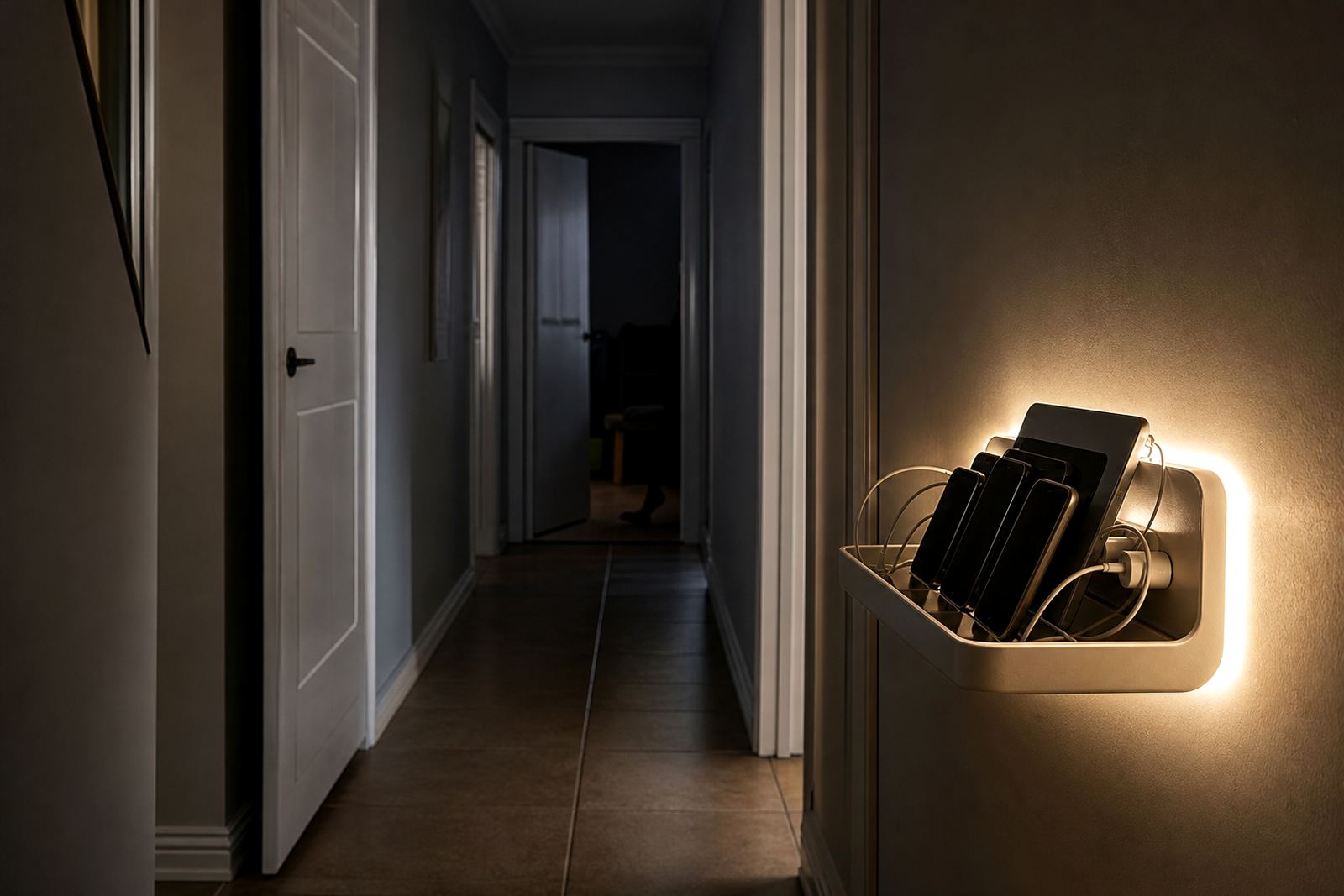
Bedrooms are where many families lose the night battle. A device under the pillow is hard to ignore, and a small glow in the dark can keep a child awake long after the rest of the family has settled. Where possible, create a shared charging spot outside sleeping areas.
A good setup does not need special equipment. It just needs consistency. You can use a basket, shelf, or counter near the plugs. If the house goes quiet early, the charging spot can become part of the bedtime ritual. Children hand in devices, brush teeth, get water, and lights go off. Simple steps, repeated every night, usually work better than long lectures.
If a family shares a room, the rule may need extra care. One child may be finished with homework while another is already asleep. In that case, it helps to agree on headphones, dim screens, and a fixed cut-off time so one person’s use does not disturb the other. In colder months in places like Pretoria or Bloemfontein, blankets and chargers may be set up before the bedtime rush begins, which avoids extra movement after lights out.
Make space for exceptions without breaking the rule
Real families do not live by perfect routines every single night. There will be school projects, travel, illness, family calls, and weekends when a film runs late. The key is to plan for exceptions instead of pretending they will never happen. That way the rule still feels fair when life changes.
Try agreeing on what counts as an exception before the evening arrives. Families can decide in advance:
- Which nights are flexible and which nights are fixed.
- Who may approve extra screen time.
- What happens if a child forgets to hand in a device.
- How to reset the routine the next day without shouting.
If the rule is broken, keep the correction short and calm. A late-night screen slip does not need a full family meeting at midnight. Address it the next day, restate the rule, and move on. The aim is consistency, not drama.
Talk through the reasons so children can buy in
Children are more likely to follow a rule when they understand why it exists. Keep the explanation practical. Devices stay off at night because sleep matters, mornings are easier, and nobody wants the house buzzing when it should be quiet. That is a good enough reason for most families.
For older children and teens, it can help to involve them in shaping the rule. Ask what time they feel ready to stop, what makes it hardest to switch off, and what support would help. A teen might say they need ten minutes to finish a conversation or save game progress. A parent might agree to that, while still keeping the final cut-off firm.
Families who want more structure can use a family media plan session to map out weekday evenings, weekend variation, and shared expectations for siblings. If concerns about sleep, behaviour, or conflict feel bigger than an ordinary house rule, speak to a qualified professional for advice that suits your child and your household.
A Durbanville example of a calmer night routine
One Durbanville family with two children and one parent working from home found that evenings were becoming noisy and rushed. Bedtime felt like a fight every night, especially on school weeks.
They changed three things. First, all devices moved to a shared charging spot in the kitchen at 8 pm. Second, notifications were silenced after that time. Third, the family agreed that the adults would also stop checking non-urgent messages once the evening routine started. Within a short time, the house was quieter and the bedtime arguments were smaller.
That kind of plan is not fancy, but it works because it matches daily life. When the household knows what happens after lights out, nobody has to negotiate from scratch every evening. The routine becomes part of family life, not a nightly battle.